China has strongly criticised the United States after Washington expanded its list of companies allegedly linked to China’s military, adding major tech players such as Alibaba and Baidu. The move has further strained already fragile relations between the world’s two largest economies.
According to the US Department of Defense, the updated list includes around 80 companies and subsidiaries said to have connections with China’s military sector. The latest revision follows a controversial earlier version released in February that was quickly withdrawn without explanation, raising questions about consistency in the US approach.
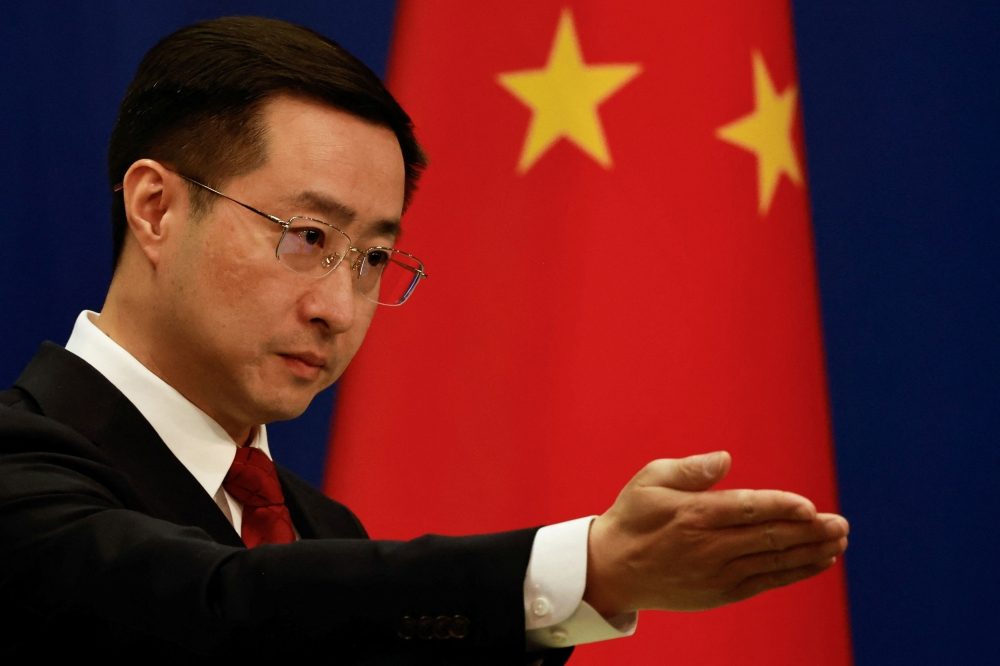
Reacting to the decision, Chinese foreign ministry spokesperson Lin Jian said Beijing “firmly opposes” what it sees as Washington’s broad use of national security concerns to justify restrictions on Chinese businesses. He described the action as “unreasonable suppression” of Chinese companies operating in global markets.
Lin urged the United States to “correct its erroneous practices” and warned that China would take “necessary measures” to protect the legitimate rights and interests of its firms if pressure continues to escalate.
The updated blacklist reportedly mirrors much of the earlier draft, with a few changes. Notably, two Chinese memory chip manufacturers—ChangXin Memory Technologies and Yangtze Memory Technologies—have been reinstated after previously being removed.
The inclusion of Alibaba, Baidu, and Tencent highlights growing US concern over Chinese firms involved in artificial intelligence and advanced technologies. Tencent had already been listed earlier, while Alibaba and Baidu have publicly rejected the allegations. Alibaba called its inclusion “a mistake,” and Baidu said there is “no credible justification” for the decision.
Although being placed on the list does not immediately restrict business operations in many cases, analysts suggest it could pave the way for stricter future sanctions and tighter controls on technology flows between the two nations.
This development comes at a sensitive time in US-China relations, following a high-profile meeting between US President Donald Trump and Chinese President Xi Jinping in Beijing last month, where both sides expressed a desire to stabilise diplomatic and economic ties. Trump has also extended an invitation for Xi to visit Washington in September, signaling ongoing efforts to manage tensions despite rising technological and trade friction.
As both nations continue to compete for dominance in artificial intelligence and semiconductor industries, the latest move reflects how technology has become the new frontline in global power politics.
On a human level, this is more than just a policy decision or a trade headline. It reflects how deeply interconnected and yet increasingly divided the global tech world has become—where innovation, politics, and national security now overlap in ways that affect companies, markets, and everyday users far beyond Washington or Beijing.