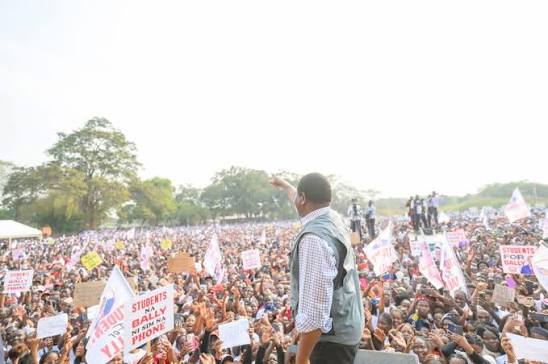
With Zambia’s presidential election just days away, President Hakainde Hichilema is stepping up his campaign efforts, putting young voters at the center of his final push for support.
The election, scheduled for Thursday, is shaping up to be a crucial test for Hichilema as he seeks another mandate amid concerns about the rising cost of living and growing public pressure over the country’s economic direction.
Young Zambians could play a decisive role in determining the outcome. Nearly half of the country’s registered voters are between the ages of 18 and 35, giving this generation significant influence over who leads Zambia into its next political chapter.
On Monday, Hichilema addressed students in the capital, Lusaka, urging them to take an active role in spreading his campaign message.
“Are you ready to campaign?” he asked the crowd, encouraging supporters to speak with classmates, roommates, people at markets and even fellow passengers on buses.
His message was clear: the campaign should not remain confined to political rallies. He wants supporters to take the conversation into everyday life and persuade voters wherever they meet them.
Hichilema is competing against 13 other presidential candidates, but the contest is increasingly focused on his battle with opposition challenger Brian Mundubile.
Mundubile has gained momentum after securing the backing of a coalition made up of rival opposition parties, creating a stronger challenge to the incumbent ahead of Thursday’s vote.
For Hichilema, the election represents more than a bid to remain in office. It is also a referendum of sorts on his economic record and whether voters believe his reforms deserve more time to deliver meaningful improvements.
The opposition, meanwhile, is seeking to capitalize on frustration among citizens dealing with the high cost of living. Rising household expenses and economic pressures have become central issues for voters, making the election especially significant for families and younger people entering the workforce.
The campaign has also raised questions about Zambia’s long-standing reputation for political stability. Although the country has generally been regarded as one of the more politically stable democracies in the region, pockets of violence during the campaign have added tension to an already closely watched election.
As voting day approaches, the political battle is moving beyond speeches and rallies. For millions of Zambians, the decision will come down to a simple but consequential question: should the country continue on its current economic path under Hichilema, or is it time to give the opposition an opportunity to lead?
The answer will be decided by voters on Thursday.
And perhaps most importantly, young Zambians now have a powerful voice in that decision. They are not simply watching the election unfold. They could be the generation that determines what comes next for Zambia.