
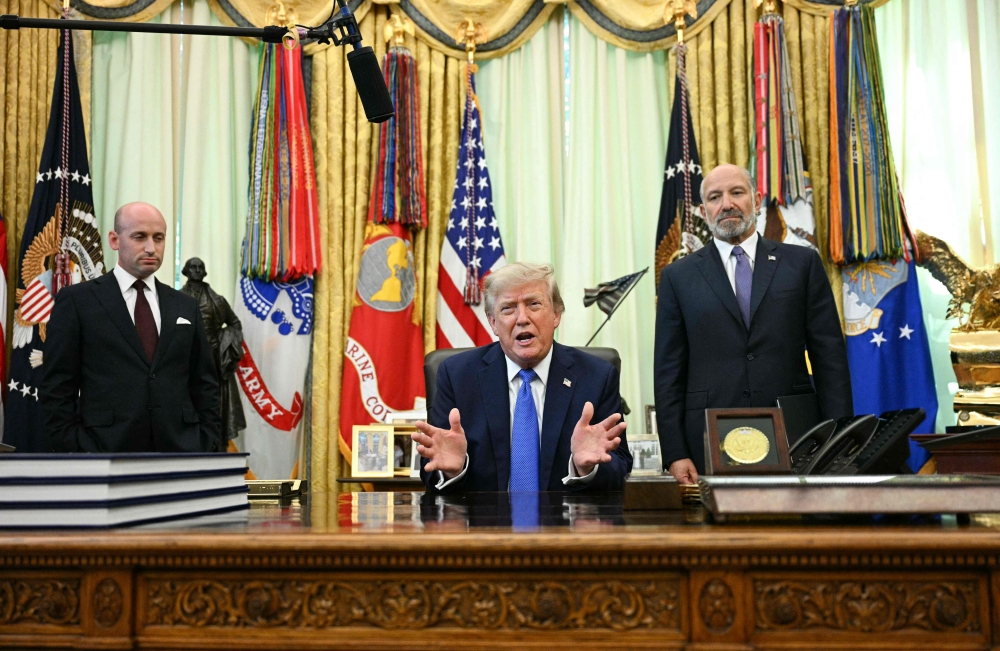
For the second time in his presidency, US President Donald Trump has taken another step toward reshaping America’s immigration and citizenship policies. On Thursday, he signed a new executive order aimed at preventing what his administration describes as “birth tourism,” a practice where foreign nationals travel to the United States primarily to give birth so their children can obtain US citizenship.
Speaking from the Oval Office, President Trump argued that birthright citizenship has been widely abused and insisted that changes are necessary to restore fairness to the immigration system. According to him, the existing interpretation of birthright citizenship has created loopholes that encourage people to misuse US immigration laws.
The latest executive order specifically targets individuals who enter the United States under tourist visas but are believed to have the primary intention of giving birth during their stay. The administration says the order is designed to reduce cases where citizenship is obtained through what it considers exploitation of existing constitutional protections.
Stephen Miller, one of Trump’s senior advisers and a leading figure behind the administration’s immigration policies, explained that the order also seeks to limit birthright citizenship eligibility for additional groups. These include children of individuals associated with foreign terrorist organizations and certain people acting on behalf of foreign governments. Miller stated that the administration believes these measures will ensure that citizenship benefits are granted only to those who genuinely qualify under the law.
This move follows an earlier executive order signed by President Trump that attempted to deny automatic US citizenship to children born to parents who were either in the country illegally or staying on temporary visas. That earlier effort faced immediate legal challenges and was ultimately blocked by lower federal courts.
The legal debate centers on the Citizenship Clause of the 14th Amendment of the US Constitution, which states that nearly everyone born on American soil is a citizen of the United States. Courts have consistently interpreted this provision as applying broadly, with only a few exceptions such as children born to foreign diplomats.
The US Supreme Court also declined to support the administration’s earlier attempt to redefine birthright citizenship, ruling that the constitutional protections remain in place. President Trump criticized that decision, calling it disappointing and reaffirming his commitment to pursuing alternative legal and policy approaches.
Supporters of the administration argue that stricter enforcement is necessary to protect the integrity of the US immigration system and discourage misuse of visa programs. Critics, however, maintain that birthright citizenship is a constitutional guarantee that cannot be altered through executive action and warn that such measures could face further legal obstacles.
The executive order represents another chapter in President Trump’s broader immigration agenda, which includes tougher border enforcement, expanded deportation efforts, and stricter visa regulations. As legal experts, lawmakers, and advocacy groups examine the latest order, it is widely expected that the policy will once again face scrutiny in the US court system.
The future of birthright citizenship remains one of the most significant and closely watched constitutional questions in American immigration policy, with potential implications for millions of families and the country’s legal framework.


