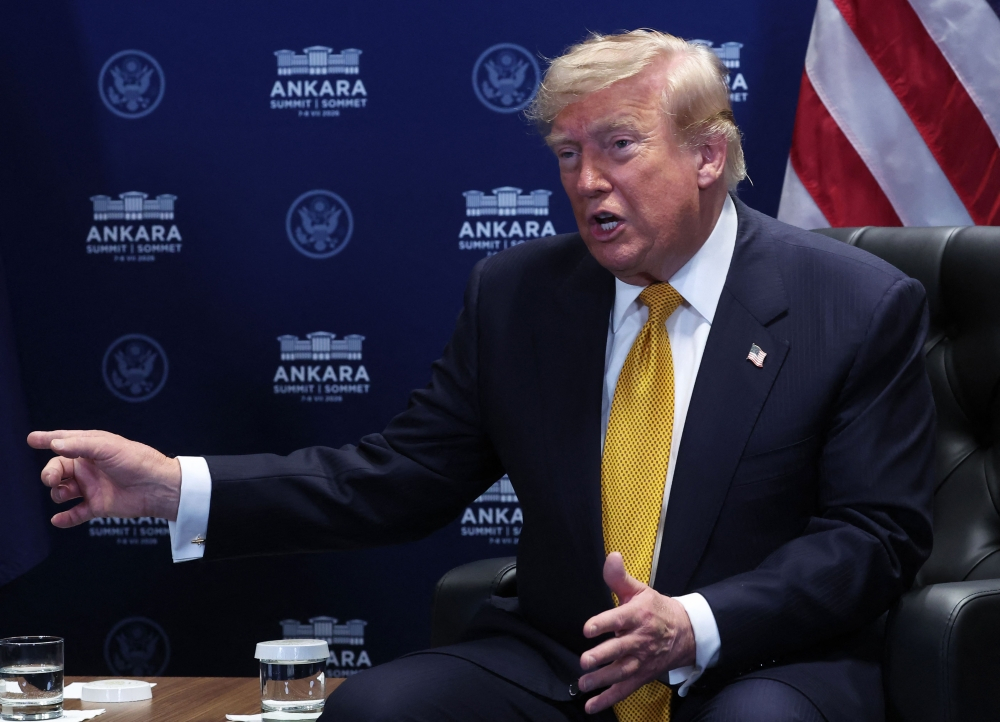
US President Donald Trump has announced that the ceasefire between the United States and Iran is effectively over following a fresh wave of military exchanges between US forces and the Islamic Republic.
Speaking during a NATO summit, Trump expressed strong criticism of Iran’s leadership after the United States carried out overnight strikes on Iranian targets. In response, Iran’s Revolutionary Guards claimed responsibility for targeting US military bases located across the Gulf region.
The escalating tensions immediately affected global financial markets, with oil prices rising by approximately five percent as investors reacted to growing uncertainty in the Middle East.
When asked whether the ceasefire had officially ended, Trump made his position clear, saying he believed the agreement was no longer in effect. He also repeated harsh criticism of Iran’s leadership, arguing that the country could not be trusted in future negotiations.
Trump stated that, from his perspective, continuing discussions with Tehran would not be productive. He accused Iranian officials of being dishonest during previous negotiations and claimed they had repeatedly misrepresented the terms of agreements reached with Washington.
Despite his comments, Trump said he intended to speak with businessman and negotiator Steve Witkoff, along with his son-in-law Jared Kushner, both of whom have been involved in diplomatic efforts concerning Iran. However, he emphasized that any future progress would depend on Tehran’s willingness to return to meaningful negotiations.
The US president also reiterated Washington’s long-standing position that Iran must not obtain nuclear weapons. According to Trump, preventing Iran from developing nuclear capabilities remains a key objective of US foreign policy.
The latest developments have intensified concerns among international observers, who fear that renewed hostilities could further destabilize the Middle East, disrupt global energy markets, and complicate ongoing diplomatic efforts aimed at reducing regional tensions.
As world leaders continue to monitor the situation, many governments are expected to call for restraint and renewed dialogue to prevent the conflict from escalating further.