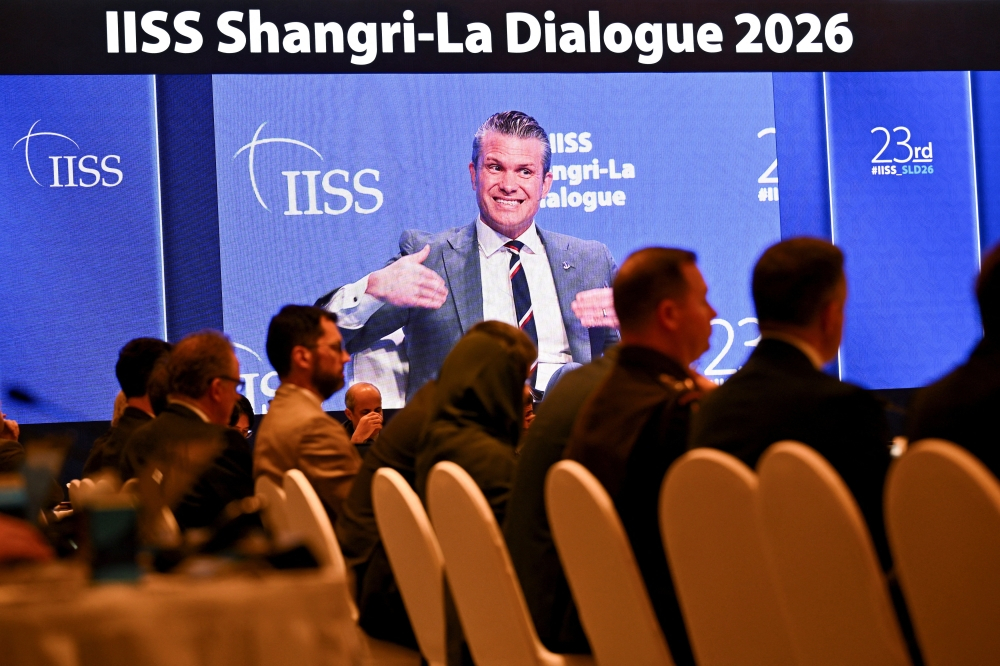
As delegates, defence leaders, and security experts gathered in Singapore for the annual Shangri-La Dialogue, one question echoed throughout the venue: Where is China?
The Shangri-La Dialogue is widely regarded as Asia’s most influential defence and security forum. Traditionally, China has used this platform to communicate its military outlook, regional priorities, and position on major global security issues. However, for the second consecutive year, Beijing chose not to send its defence minister, leaving many participants wondering about the message behind the decision.
Chinese Defence Minister Dong Jun was notably absent from the event, missing an opportunity to engage directly with senior defence leaders from the United States, Australia, Japan, France, Britain, and numerous other nations. Instead, China was represented by a delegation composed primarily of military scholars and experts from the People’s Liberation Army.
The reduced level of representation has drawn significant attention because China has historically played a prominent role at the conference. In previous years, speeches delivered by China’s defence minister or other senior officials often served as major highlights of the event, offering insights into Beijing’s strategic thinking and military priorities.
This year, however, no such keynote address was scheduled. Similar to the previous year, China’s traditional speaking slot was absent from the programme, creating a noticeable gap in discussions surrounding regional security.
United States Defence Secretary Pete Hegseth openly acknowledged the absence during his keynote remarks.
He expressed disappointment that his Chinese counterpart was not present, emphasizing the importance of direct communication between military leaders. According to Hegseth, face-to-face discussions remain crucial, particularly when misunderstandings can arise from military activities conducted at sea or in the air.
Australian Deputy Prime Minister and Defence Minister Richard Marles also described the absence as a missed opportunity. He stressed that international security forums provide valuable occasions for countries to engage in candid discussions about sensitive issues and regional flashpoints.
Despite his absence from the Singapore event, Dong Jun recently met with Hegseth during US President Donald Trump’s visit to China earlier this month, demonstrating that communication channels between both nations remain open.
Members of the Chinese delegation sought to downplay concerns. Zhou Bo, a retired senior colonel in the People’s Liberation Army and a participant in the delegation, pointed out that this was not the first time China’s defence minister had skipped the conference. He noted that academic and expert delegations had represented China before, while acknowledging that the current delegation’s profile was lower than in many previous years.
Security analysts, however, have offered different interpretations.
Some observers believe Beijing may be intentionally avoiding difficult public discussions regarding sensitive topics such as Taiwan, regional military tensions, and the impact of recent anti-corruption investigations within China’s military establishment.
Political scientist Chong Ja Ian from the National University of Singapore suggested that the absence could be linked to a desire to avoid challenging questions from international audiences and journalists. He also noted that delegations made up primarily of researchers and academics may face limitations when it comes to speaking authoritatively on official government policy.
Others believe China may simply be trying to avoid a repeat of previous confrontations that occurred at the dialogue.
Last year, the conference saw sharp exchanges after US officials characterized China as a growing challenge in the Indo-Pacific region and encouraged allied nations to strengthen defence spending. Beijing strongly rejected those remarks, accusing Washington of unfairly portraying China as a threat.
This year, Hegseth adopted a more measured approach. While reaffirming the United States’ commitment to regional stability, he stated that no nation should be allowed to dominate the security and prosperity of others. He also observed that relations between Washington and Beijing appeared to be in a better position than they had been for several years.
China has maintained a significant presence at the Shangri-La Dialogue since 2007, regularly sending high-ranking military officials and defence ministers. The conference has long served as one of the few venues where senior defence leaders from rival powers can engage directly in dialogue.
Veteran Singapore diplomat Bilahari Kausikan offered a broader perspective on the issue. He argued that the primary purpose of the Shangri-La Dialogue has always been to ensure sustained engagement between the United States and Southeast Asia.
While he acknowledged that having China’s defence minister attend would be beneficial, he emphasized that the event’s success does not depend entirely on Beijing’s highest-level participation.
As the conference continues, questions remain about what China’s lower-profile attendance signals for future diplomatic engagement. Whether it reflects strategic caution, evolving priorities, or a temporary shift in approach, Beijing’s absence has undoubtedly become one of the most talked-about stories of this year’s gathering.
In an increasingly complex geopolitical landscape, presence often speaks as loudly as words. For many delegates in Singapore, China’s decision not to send its top defence officials has left a message that is still being interpreted.