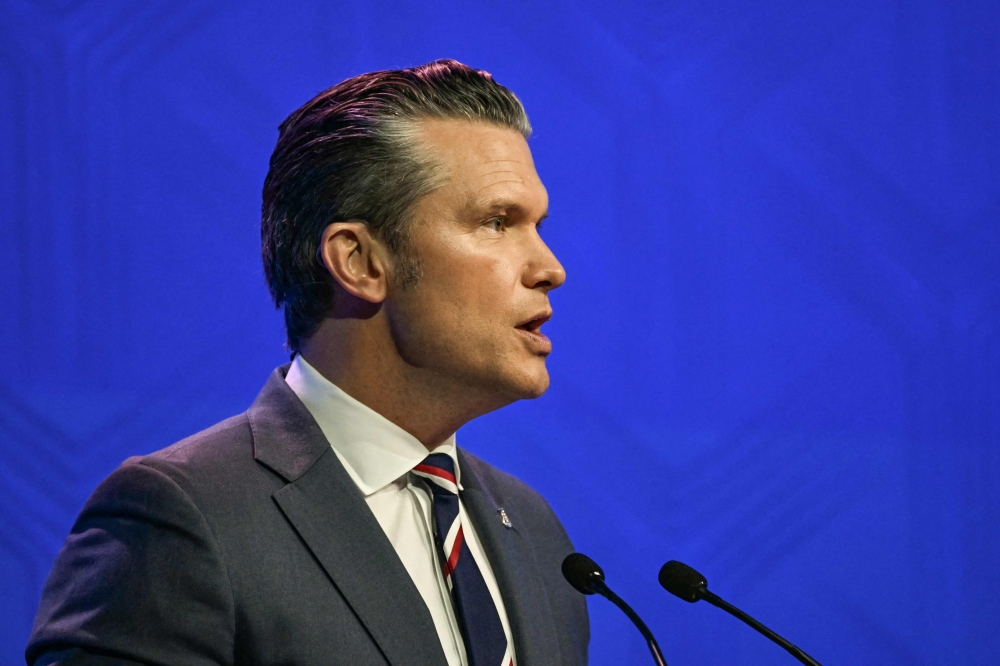
As geopolitical tensions continue to shape the future of the Indo-Pacific region, US Defense Secretary Pete Hegseth delivered a carefully balanced message during the Shangri-La Dialogue in Singapore, one of Asia’s most influential defense and security forums.
Addressing military leaders, policymakers, and security experts from around 45 countries, Hegseth acknowledged growing concerns about China’s rapid military modernization while emphasizing that the United States is not seeking confrontation. Instead, Washington’s objective is to maintain what he described as a “stable equilibrium” throughout the region.
His remarks represented a noticeable shift in tone compared to previous statements that portrayed China as a more immediate security challenge. This year, Hegseth focused on the importance of maintaining long-term regional stability, preserving economic prosperity, and preventing any single nation from dominating Asia’s strategic landscape.
According to Hegseth, many countries across the Indo-Pacific have legitimate concerns regarding China’s expanding military capabilities and increasing military activities beyond its borders. However, he stressed that the United States remains committed to a balanced approach that combines deterrence with diplomatic engagement.
The Pentagon chief stated that America seeks a durable balance of power that protects the interests of both the United States and its allies. He emphasized that no nation, including China, should be able to impose its dominance in a way that threatens regional security or economic growth.
While discussing relations with Beijing, Hegseth reiterated Washington’s willingness to engage constructively and respectfully with Chinese officials. He expressed disappointment that China’s Defense Minister Dong Jun was absent from the conference for the second consecutive year, though he indicated openness to future opportunities for dialogue.
China’s delegation at the event consisted primarily of military scholars and experts led by Major General Meng Xiangqing from the National Defense University. Analysts have suggested that Beijing’s decision not to send a senior defense official reflects its growing confidence as a global power and its preference to avoid direct public scrutiny regarding regional security disputes.
The issue of Taiwan also surfaced during the discussions. Hegseth confirmed that the United States has not altered its longstanding position regarding Taiwan. However, he noted that future decisions concerning arms sales to the self-governed island would ultimately be determined by US President Donald Trump.
The comments come at a time when relations between Washington and Beijing remain complex, balancing economic cooperation with strategic competition. Earlier this month, President Trump spoke positively about trade opportunities with China, though details of potential agreements remain limited.
Observers noted a significant difference in Hegseth’s tone compared to previous appearances. Some Chinese analysts described his latest remarks as more moderate and less confrontational. However, opinions differed among American political figures.
US Senator Tammy Duckworth voiced concern that the administration’s approach might be too accommodating toward China, particularly as global conflicts and security challenges continue to emerge in other regions.
Another major theme of Hegseth’s speech involved defense spending among US allies. He praised countries such as Japan, South Korea, Australia, and the Philippines for strengthening their military capabilities and contributing to regional security efforts.
At the same time, he delivered a clear message to nations that rely heavily on American military support. According to Hegseth, allies must contribute more actively to collective defense arrangements, warning that future partnerships may evolve if some countries fail to carry their share of security responsibilities.
Beyond Asia, Hegseth addressed the ongoing uncertainty surrounding negotiations between the United States and Iran. Although discussions aimed at reaching a peace agreement continue, significant obstacles remain. He stated that the United States retains the capability to resume military operations if necessary, underscoring Washington’s commitment to protecting its interests and allies.
The Pentagon chief is also expected to participate in meetings with British and Australian defense leaders under the AUKUS security partnership. Reports suggest the alliance may soon announce new defense initiatives, potentially involving advanced autonomous underwater technologies.
As global power dynamics continue to evolve, Hegseth’s message highlighted a central challenge facing world leaders today: maintaining peace and stability in an increasingly competitive international environment. His call for balance rather than confrontation reflects the delicate diplomatic path that many nations hope will preserve security and prosperity across the Indo-Pacific for years to come.