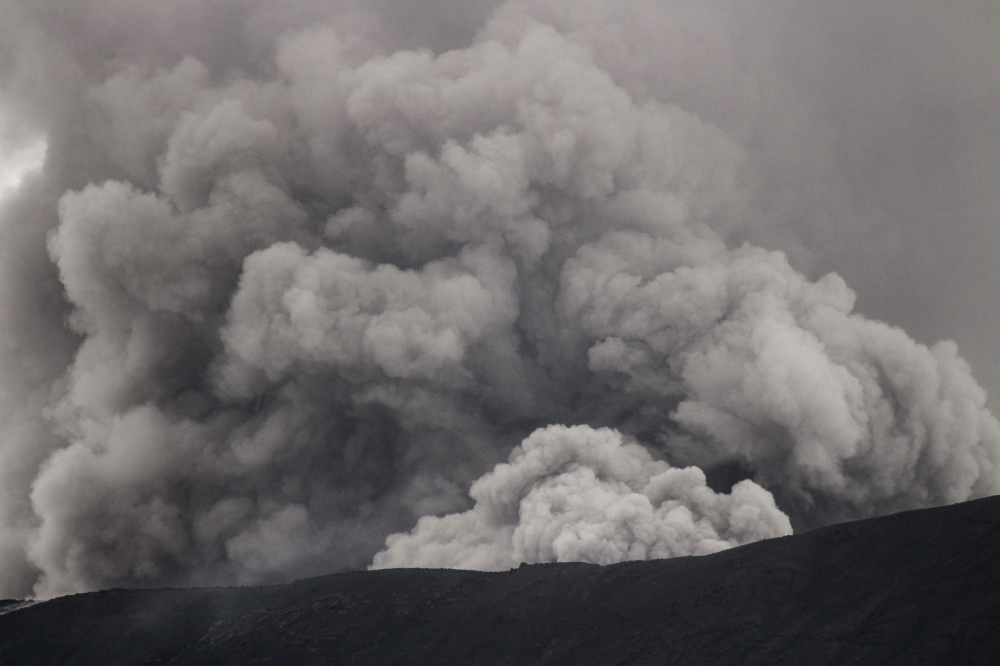
Indonesia’s highly active Mount Lewotobi Laki-Laki volcano erupted several times on Friday, sending thick columns of volcanic ash high into the atmosphere and disrupting air travel in the region.
According to Indonesia’s national volcanology agency, the latest eruption occurred at approximately 11:15 a.m. local time, ejecting volcanic material up to 2.5 kilometers above the crater. The eruption followed a series of earlier volcanic events recorded throughout the day, highlighting the volcano’s continued instability.
Located on Flores Island in eastern Indonesia, Mount Lewotobi Laki-Laki remains under the country’s second-highest volcanic alert status. Authorities have maintained a five-kilometer exclusion zone around the crater to protect residents and visitors from potential hazards.
Officials have also warned communities living near river channels to remain vigilant. Heavy rainfall could trigger dangerous lahars, fast-moving flows of volcanic mud, ash, and debris capable of causing significant destruction downstream.
The ongoing volcanic activity has already impacted transportation across the region. Operations at Maumere Airport, situated roughly 60 kilometers west of the volcano, were temporarily suspended as ash clouds posed risks to aircraft safety. The airport closure affected at least five domestic flights, causing travel disruptions for passengers and airlines.
Mount Lewotobi Laki-Laki, whose name translates to “man” in Indonesian, stands at 1,584 meters and forms a twin volcanic system with the nearby Mount Lewotobi Perempuan, meaning “woman,” which rises to 1,703 meters and has remained comparatively calm.
This is not the first time the volcano has caused major disruptions. In July last year, Lewotobi Laki-Laki generated a towering ash plume reaching approximately 18 kilometers into the sky, leading to the cancellation of dozens of flights at Bali’s international airport and affecting thousands of travelers.
Indonesia is home to some of the world’s most active volcanoes due to its location along the Pacific Ring of Fire, a geologically active region where tectonic plates frequently interact. As a result, volcanic eruptions and seismic events remain a regular challenge for communities across the archipelago.
While authorities continue monitoring the situation closely, residents are being urged to follow official safety guidance and avoid restricted zones. The latest eruptions serve as another reminder of the immense natural forces that shape life in Indonesia, where communities have learned to coexist with some of the planet’s most powerful volcanic landscapes.
As volcanic activity continues, emergency teams remain prepared to respond quickly should conditions worsen, prioritizing public safety and minimizing disruption to affected communities.