Qatar has sounded a stark warning over any potential military escalation between the United States and Iran, emphasizing that such a conflict would have devastating consequences for the wider Middle East. The statement came after Washington threatened air strikes in response to Iran’s ongoing crackdown on mass protests.
Speaking at a press conference in Doha, Qatar’s foreign ministry spokesman Majed al-Ansari said, “We know that any escalation … would have catastrophic results in the region and beyond, and therefore we want to avoid that as much as possible.”
The Gulf nation has previously played a key role in mediating tensions between the two powers. In June, Iran launched an attack on the US’ Al Udeid military base in Qatar, in retaliation for earlier American strikes on Iranian nuclear facilities. Doha leveraged the unprecedented situation to facilitate a swift truce between Washington and Tehran.
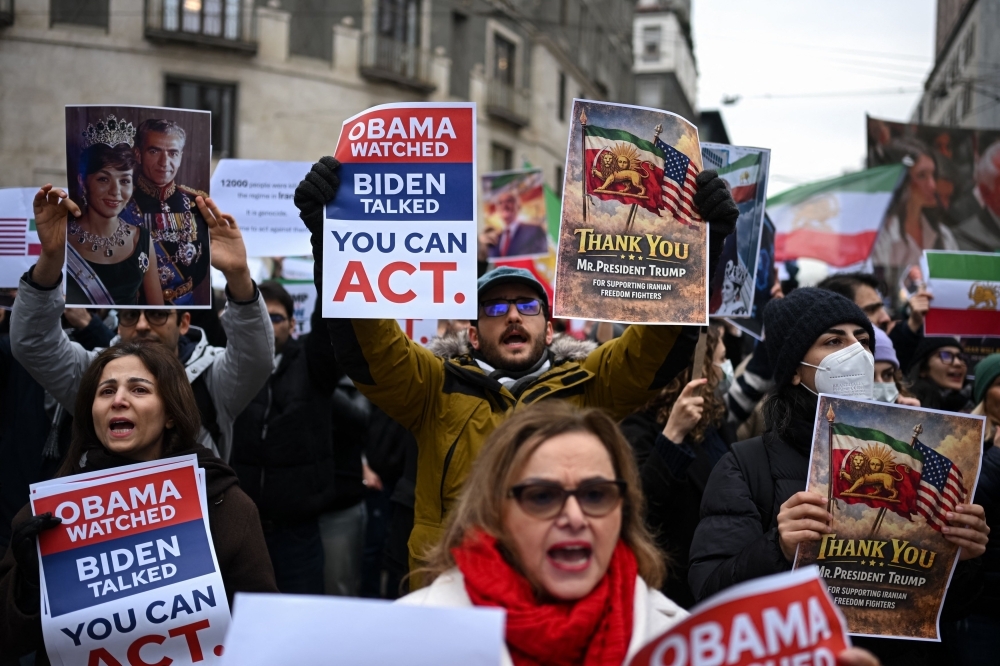
Meanwhile, Iran is facing one of the most significant internal challenges since the 1979 Islamic revolution. Mass protests have erupted across the country since Thursday, drawing international attention as the Iranian government cracks down heavily on demonstrators.
The White House reiterated on Monday that US President Donald Trump is considering air strikes in an effort to halt the violent repression. Rights groups, despite restricted access and an ongoing internet blackout in Iran, report a growing number of casualties.
Iran’s parliament speaker Mohammad Bagher Ghalibaf responded to US threats, asserting that Iranian military and shipping assets are “legitimate targets,” according to state TV. The Norway-based NGO Iran Human Rights (IHR) has confirmed 648 deaths, including nine minors, but warns the actual toll could be far higher, with some estimates exceeding 6,000.
Despite the rising tensions, diplomatic channels remain open. Qatar is actively engaging with all regional parties to pursue a peaceful resolution. “We are still at a state right now where we believe that the diplomatic resolution can come out of this,” said Ansari, adding that Doha is “talking to all parties, obviously with our neighbours and our partners in the region to find a diplomatic solution.”
As the world watches nervously, Qatar’s intervention highlights the delicate balance between military threats and the urgent need for dialogue. Behind the headlines, the human cost of conflict is already being felt — families fear for their loved ones, communities face uncertainty, and the hope for peace depends on careful diplomacy.