For years, e-wallets were often associated with younger Malaysians — university students splitting restaurant bills, young professionals paying for food delivery, or digital natives shopping from their phones.
That perception is changing quickly.
New findings from the Ipsos Malaysia E-Wallet Landscape 2026 report show that e-wallet usage is spreading across generations, with Malaysians in their 30s, 40s, 50s and beyond increasingly making digital payments part of their everyday lives.
The report, based on a survey of 1,029 Malaysians aged between 18 and 74 conducted in April 2026, reveals an important shift in who is embracing e-wallets.
Interestingly, the strongest growth came from Malaysians aged 35 to 44.
E-wallet usage among this age group increased by nine percentage points to 64 per cent. Among Malaysians aged 45 and above, usage also climbed, rising four percentage points to 44 per cent.
Meanwhile, usage among Malaysians aged 25 to 34 — traditionally viewed as one of the strongest e-wallet user groups — remained unchanged at 65 per cent. Among those aged 18 to 24, usage increased only slightly, by two percentage points, reaching 64 per cent.
The numbers tell a bigger story.
E-wallets are no longer something used mainly by younger Malaysians. They are becoming part of everyday financial life for people across different generations.
From a digital trend to an everyday habit
Just a few years ago, the typical image of an e-wallet user was a young person using a smartphone to make online purchases or order food.
Today, the reality looks very different.
The biggest growth in e-wallet usage is increasingly connected to ordinary, offline activities.
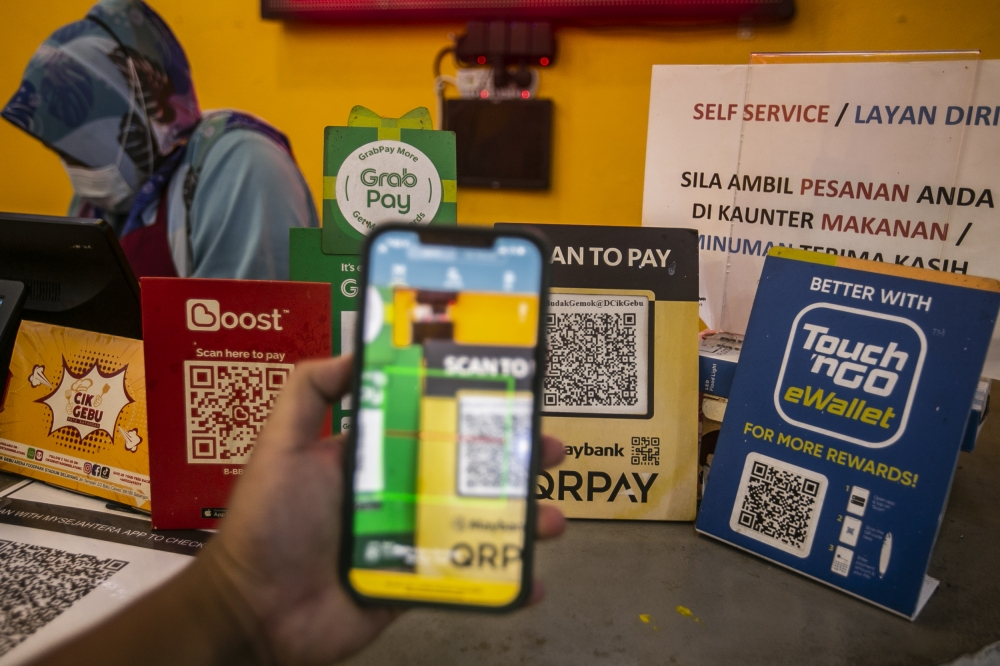
Malaysians are using digital wallets to pay for meals, parking, tolls, groceries and retail purchases — the kinds of transactions people make as part of their normal daily routines.
Think about the life of a working parent in their 40s.
They may use an e-wallet to pay for breakfast before work, parking at the office, lunch during the day, groceries after work and perhaps a toll on the journey home.
None of these activities are particularly “digital” in nature.
The payment method simply happens to be digital.
That is perhaps the most important change taking place in Malaysia’s cashless journey.
E-wallets are becoming less about technology and more about convenience.
Ipsos described the shift as Malaysia moving beyond digital payment adoption towards “digital payment dependence”, highlighting the growing importance for businesses of being part of the payment ecosystems their customers already prefer.
In other words, businesses can no longer assume that cash or traditional card payments are enough.
Why middle-aged Malaysians are embracing e-wallets
The rapid increase among Malaysians aged 35 to 44 is particularly significant.
This is a generation that manages a wide range of everyday expenses — from transportation and food to household shopping and family-related spending.
For many, the appeal is simple: convenience.
There is no need to search for cash at a toll booth. There is less reason to carry large amounts of physical money. Payments can be completed within seconds, often directly from a smartphone that is already in the user’s hand.
As cashless payments become more widely accepted, the technology also becomes easier to adopt.
The result is a gradual change in behaviour.
People who may once have thought, “I don’t really need an e-wallet,” can suddenly find themselves using one several times a day.
Trust is becoming less of a barrier
Another important factor is the growing maturity of Malaysia’s e-wallet ecosystem.
According to the Ipsos report, the two leading platforms, Touch ‘n Go eWallet and MAE, recorded safety and reliability scores ranging from 77 per cent to 82 per cent.
That suggests consumers increasingly view established e-wallet platforms as reliable tools rather than experimental digital services.
For older users in particular, trust can play an important role when adopting new financial technology.
People who were accustomed to cash or traditional banking may naturally have questions about security, reliability and what happens if something goes wrong.
As established platforms become more familiar and widely used, some of those concerns appear to be diminishing.
“Where can I use it?” is becoming a weaker concern
Another traditional barrier to e-wallet adoption has been acceptance.
There is little value in having money stored digitally if consumers cannot use it when they need to pay.
That problem is becoming less significant.
The Ipsos report indicates perceived acceptance among users for the two leading wallets stands at around 76 per cent to 81 per cent.
From restaurants and retail outlets to parking facilities and toll payments, cashless payment options have become increasingly visible in everyday life.
The more businesses accept digital payments, the more useful e-wallets become.
And the more useful they become, the more consumers are likely to use them.
It is a cycle that can accelerate adoption across entire communities.
The rise of cashless payments also brings new responsibilities
While the growing adoption of e-wallets is a sign of Malaysia’s increasingly digital economy, there is another side to the story that should not be overlooked.
More digital payments mean greater exposure to digital scams.
As Malaysians in their 40s, 50s and 60s increasingly rely on smartphone-based financial services, digital literacy and scam awareness become increasingly important.
Phishing attempts, fake payment requests, fraudulent links, impersonation scams and social engineering can affect anyone.
Older consumers may also require more targeted education because some may have had less exposure to the digital fraud tactics that have become familiar to younger smartphone users.
This means financial institutions, technology companies, businesses and regulators all have a role to play.
Making payments easier is important.
Making them safer and helping consumers understand how to protect themselves is equally important.
What this means for Malaysian businesses
The growth of e-wallet adoption across generations also sends a clear message to businesses.
Digital payment acceptance is increasingly becoming a basic customer expectation rather than an optional feature.
A restaurant that accepts only cash may inconvenience customers who rarely carry it.
A retailer without convenient cashless options could make a purchase unnecessarily difficult.
A parking facility that does not support widely used digital payment methods can create frustration before a customer has even entered a business.
For businesses, the lesson is straightforward: understand how customers prefer to pay and make the payment experience as easy as possible.
The cashless economy is not only about technology.
It is about removing friction from everyday transactions.
Malaysia’s cashless future is becoming a reality
The most interesting part of the Ipsos findings may not be that younger Malaysians continue to use e-wallets.
It is that older generations are increasingly joining them.
The gap between generations is narrowing.
Four years ago, e-wallet usage was much more strongly associated with younger consumers. Today, usage across adult age groups is considerably closer, showing that digital payments are becoming part of mainstream Malaysian life.
For consumers, this means greater convenience.
For businesses, it means adapting to changing payment habits.
For financial institutions and regulators, it means ensuring that increased digital participation comes with stronger consumer protection and education.
And for Malaysia as a whole, it marks another step towards a society where cashless payments are no longer considered a novelty.
The e-wallet revolution may have started with younger Malaysians, but it is no longer theirs alone.
From teenagers and young professionals to parents, business owners and older Malaysians, digital payments are becoming part of how the country pays, shops, travels and lives.
The future of payments is increasingly cashless — and for millions of Malaysians, that future is already part of everyday life.