The frustration of India’s young job seekers is once again spilling onto the streets.
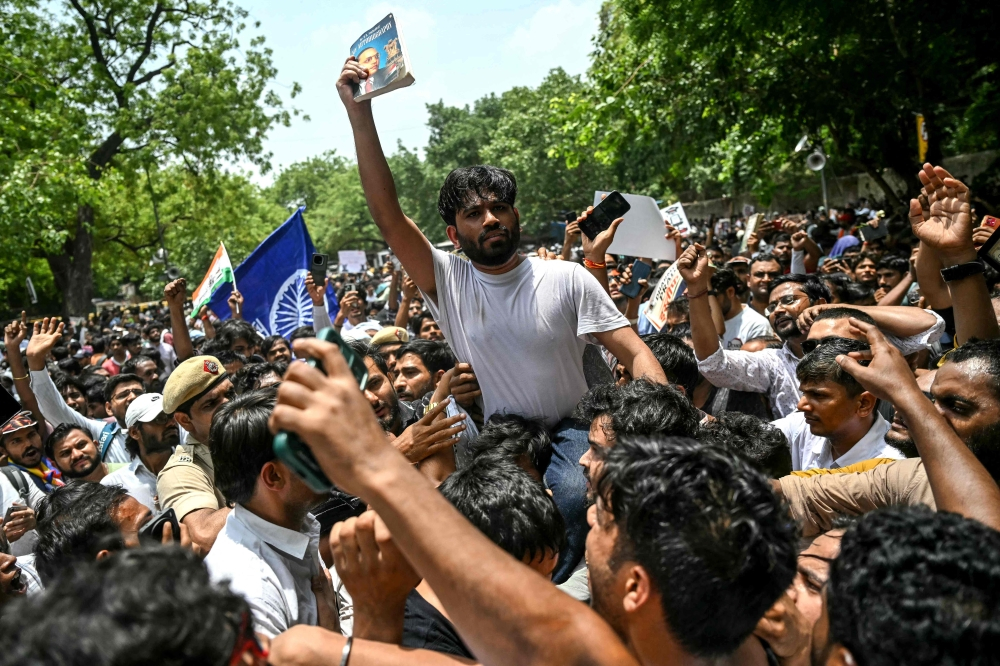
In Jharkhand, hundreds of students marched towards the state assembly in Ranchi today, demanding action over alleged irregularities in government recruitment examinations. Several protesters have also begun hunger strikes, turning what started as a student protest into a growing challenge for the state government.
The demonstrations in Ranchi, the capital of Jharkhand, began on July 29. The protests came shortly after a youth-led movement in New Delhi, known as the “Cockroach” movement, drew national attention to concerns surrounding India’s examination system.
Among those leading the Jharkhand protest is student leader Devendra Nath Mahto, 33, who has reportedly been on hunger strike for more than a week. At least six protesters are currently participating in hunger strikes.
“We want the whole system to change,” Mahto said, according to Indian media reports.
At the heart of the protesters’ demands is the role of a private company responsible for conducting examinations for the state civil service. Students are calling for several examinations conducted by the company to be cancelled and are demanding a federal police investigation into the alleged irregularities.
The situation became increasingly tense today as large numbers of police officers were deployed around the state assembly. Barbed-wire barricades were placed around the area as hundreds of students gathered, chanting slogans and calling for accountability.
Repeated discussions between the protesters and the state government have so far failed to produce an agreement.
Jharkhand Chief Minister Hemant Soren has attempted to calm the situation by accepting some of the protesters’ demands. Meanwhile, several members of the civil service body responsible for overseeing the examinations have stepped down.
Speaking on Sunday, Soren called for dialogue, saying that every problem can be resolved through discussion.
But for many of the protesting students, the issue goes far beyond a single examination.
Government jobs remain one of the most sought-after career paths for young Indians, particularly because they offer stability and long-term security. With millions of candidates competing for a limited number of public-sector positions, concerns about examination fairness can quickly become deeply personal.
For students who spend years preparing for competitive examinations, the belief that a test may have been compromised can mean more than losing a single opportunity. It can represent lost time, financial pressure, emotional stress and uncertainty about the future.
That is why the Jharkhand protests are attracting attention beyond the examination halls.
The developments also come in the shadow of the New Delhi protests, which were organised by the online Cockroach Janta Party. Protesters in the capital rallied for 36 days over alleged failures in India’s examination system.
The movement eventually led to the resignation of then Education Minister Dharmendra Pradhan, giving the campaign an unusual political victory and pushing examination integrity higher on the national agenda.
Now, similar concerns are being raised in Jharkhand.
Although the political circumstances are different, the underlying frustration is familiar: young people want a recruitment system they can trust.
The New Delhi movement challenged Prime Minister Narendra Modi’s Bharatiya Janata Party, while the Jharkhand protests are directed at a state government led by Hemant Soren that stands in opposition to the BJP.
The growing demonstrations highlight a wider concern facing India: how to maintain public confidence in competitive examinations at a time when millions of young people depend on them for access to scarce government employment.
For the students gathered outside the Jharkhand assembly, this is not simply about one examination, one company or one government department.
It is about whether years of preparation will be judged fairly.
And as the protests continue, the pressure on authorities to provide clear answers, credible investigations and meaningful reforms is likely to grow.
The question now is not only whether the protests can be brought to an end, but whether the concerns behind them can be addressed in a way that restores confidence among the students whose futures depend on the system.