Delhi Police has removed Jantar Mantar from the list of officially designated protest venues and identified three alternative locations for public demonstrations, according to an official order issued on October 11 by Delhi Police Commissioner Anurag Kumar.
Under the revised arrangement, Ramlila Maidan, Burari Ground and CBD Ground in East Delhi have been designated as the new locations for organising protests and demonstrations. The decision follows a review initiated by the Ministry of Home Affairs, which constituted a committee to examine alternative venues where citizens could exercise their right to organise peaceful protests.
The official order stated that the committee had recommended changes to the existing arrangements, leading to the removal of Jantar Mantar from its status as a designated protest site. The three newly identified venues are expected to serve as alternative locations for demonstrations in the national capital.
Delhi Police also announced that a detailed and revised standard operating procedure (SOP) governing protests at the new venues would be issued separately. The latest order partially modifies an earlier standing order dated April 28, 2022, which had governed arrangements for protests and demonstrations.
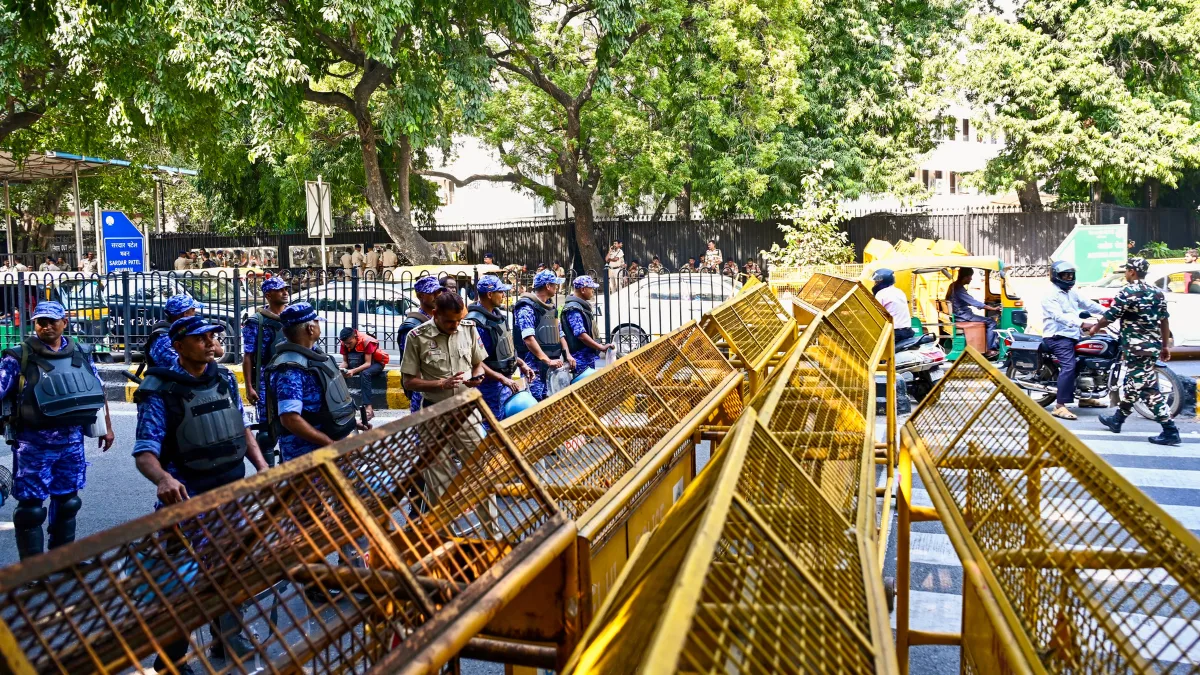
The development comes amid heightened security in Delhi following calls for public gatherings at Jantar Mantar. The location has long been associated with political demonstrations, public campaigns and citizens seeking to draw attention to social and national issues.
CJP criticises decision to remove Jantar Mantar as protest venue
The decision has drawn strong criticism from the Cockroach Janta Party (CJP). Party co-convener Saurav Das described the move as “unacceptable” and said the organisation would not accept what it considers an arbitrary decision.
In a post on X, Das questioned the government’s decision and challenged Prime Minister Narendra Modi over the removal of Jantar Mantar from the list of designated protest sites.
He also raised concerns about whether members of the public, civil society organisations and other stakeholders had been consulted before the decision was made. According to Das, changing the status of such a prominent protest venue without broader public consultation raises questions about citizens’ participation in decisions affecting their democratic rights.
Das argued that Jantar Mantar represents an important space for people to express disagreement, demand accountability and bring public concerns to the attention of political leaders. He described the decision as an attack on the fundamental right to protest and peaceful assembly.
In his criticism, Das warned that restricting access to a familiar protest venue could have wider implications for democratic expression in India. He maintained that the right to peaceful protest should remain an essential part of public life rather than become increasingly difficult to exercise.
What the change means for protesters
With Jantar Mantar no longer recognised as a designated protest venue under the new order, organisers will need to consider the three newly designated locations and follow the revised procedures once they are issued.
The practical impact will depend on how the new arrangements are implemented, including the process for obtaining permission, managing crowds, ensuring public safety and providing access to the designated sites. Protest organisers and participants will need to monitor official announcements for further details.
For many people, Jantar Mantar is more than a location in central Delhi. Over the years, it has become closely associated with public demonstrations, civic campaigns and efforts to hold those in power accountable. Moving demonstrations elsewhere therefore represents a significant change in how organised protests may take place in the capital.
At the same time, authorities have a responsibility to manage public gatherings, protect residents and maintain access to essential services. The challenge is to ensure that these responsibilities are balanced with citizens’ ability to express their views peacefully and lawfully.
Ultimately, the debate surrounding Jantar Mantar goes beyond the choice of a protest venue. It raises a broader question about how a democracy accommodates disagreement and ensures that people can make their voices heard. Whatever location is chosen, the effectiveness of the new arrangements will depend on whether they provide a practical, accessible and transparent way for citizens to exercise their right to peaceful assembly.