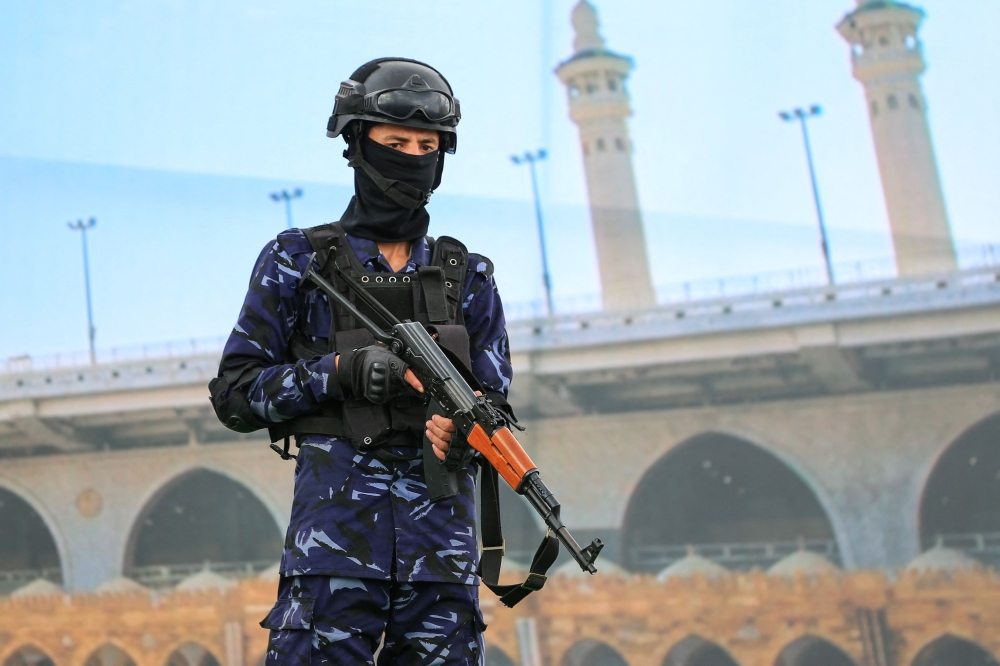
Residents in Riyadh were urged to stay indoors early Saturday after Saudi authorities issued a “hostile aerial threat” warning, followed by the sound of explosions across parts of the capital, according to AFP journalists on the ground.
The alert, sent to residents shortly before 3:00 am local time, marked the first reported air raid warning in Riyadh since fighting resumed in neighbouring Yemen. The warning remained in place for roughly half an hour before Saudi Arabia’s civil defence agency announced that it had been lifted.
AFP journalists reported hearing two explosions during the alert. Saudi authorities have not yet publicly identified the source of the threat or provided details about what caused the explosions.
The development comes amid a sharp escalation in fighting involving Yemen’s Houthi movement and Saudi-backed Yemeni government forces. The conflict has intensified since July, when fighting resumed after a fragile period of calm.
The Houthis have also declared a maritime blockade affecting Saudi-linked shipping and have carried out attacks in and around the Red Sea, adding another layer of concern to an already fragile regional security situation.
For residents of Riyadh, the overnight warning brought the conflict closer to Saudi Arabia’s political and economic centre. Until now, much of the recent fighting had been concentrated elsewhere, making the latest alert particularly significant for people living in the capital.
The situation became even more sensitive after Saudi Arabia accused the Houthis of targeting Mecca on Wednesday. Riyadh described the incident as a “cowardly terrorist attack” on Islam’s holy city, which receives millions of Muslim pilgrims every year. The Houthis rejected the accusation, calling it a “worn-out lie.”
The renewed conflict is also having consequences beyond the battlefield. Saudi Arabia is one of the world’s leading oil exporters, and disruptions around important maritime routes can have implications for energy markets and international trade.
Data from maritime tracking company Kpler cited in the report showed that Saudi oil exports through the Bab al-Mandab Strait had declined since July, although five loaded Saudi ships were reported to have passed through the route during the previous week.
The Bab al-Mandab is a strategically important maritime passage connecting the Red Sea with the Gulf of Aden. Any prolonged disruption in the area could add further pressure to global shipping networks, which are already facing difficulties because of wider tensions across the Middle East.
The roots of the Yemen conflict stretch back to 2014, when the Houthis seized control of Sanaa and other parts of the country. Saudi Arabia subsequently led a military intervention beginning in March 2015 in support of Yemen’s internationally recognised government.
A fragile truce reached in 2022 helped reduce some of the fighting, but that period of relative calm has now broken down, according to the report.
International concern has grown as fighting has spread and control of key coastal areas has become increasingly contested. The situation is particularly important for maritime trade because the Bab al-Mandab Strait is a major route for commercial shipping.
The United States has also taken steps related to Saudi Arabia’s defence capabilities. According to the report, Washington approved the sale of 48 F-35 fighter jets to Saudi Arabia. The US State Department said the deal, valued at US$24.3 billion, is intended to help Riyadh “deter current and future threats.”
Meanwhile, the humanitarian impact continues to grow. The United Nations said renewed fighting had displaced more than 112,000 people, while nearly 3,000 others had crossed the sea to Djibouti, adding to the challenges facing Yemen’s already vulnerable population.
For people in Riyadh, however, the immediate concern is much closer to home: the sound of explosions in the capital and the sudden warning to remain indoors have provided a stark reminder that the consequences of the regional conflict can reach far beyond the front lines.
As tensions continue to develop, attention will remain focused on what caused the overnight aerial threat, whether further attacks occur, and how Saudi Arabia and other regional powers respond.
This report is based on information and claims attributed to AFP, Saudi authorities, the United Nations, Kpler and other sources cited in the original report. Some details remain subject to further confirmation as authorities have not publicly identified the origin of the threat.