Tensions across the Middle East have intensified sharply after Iran launched a fresh wave of attacks against US positions in several countries, following a series of American strikes on Iranian targets.
Iran’s Revolutionary Guards said it carried out attacks against US bases and military facilities in Jordan, the United Arab Emirates, Kuwait, Bahrain and Iraq’s autonomous Kurdistan region. The escalation represents one of the most serious exchanges between the two sides in recent weeks.
The latest confrontation comes after US strikes reportedly killed 18 people in Iran, according to Iranian military and state media. Among the most disturbing incidents was an attack that struck a wedding gathering in southern Iran, where Iranian authorities said four people, including a child, were killed and more than 50 others were injured.
The reported wedding deaths have added another deeply human dimension to an already devastating conflict.
According to the Iranian Red Crescent, the attack took place in Sirik. Video released by an Iranian government account showed extensive debris and damage at what was identified as the wedding location, while people could be heard screaming in the background.
The US military has not directly addressed the reported wedding strike.
US Central Command spokesman Tim Hawkins said that the US military does not target civilians and accused Iran’s Revolutionary Guards of doing so.
Iran responds with attacks across the region
Iran’s Revolutionary Guards said its response included missile and drone attacks against American positions across the Middle East.
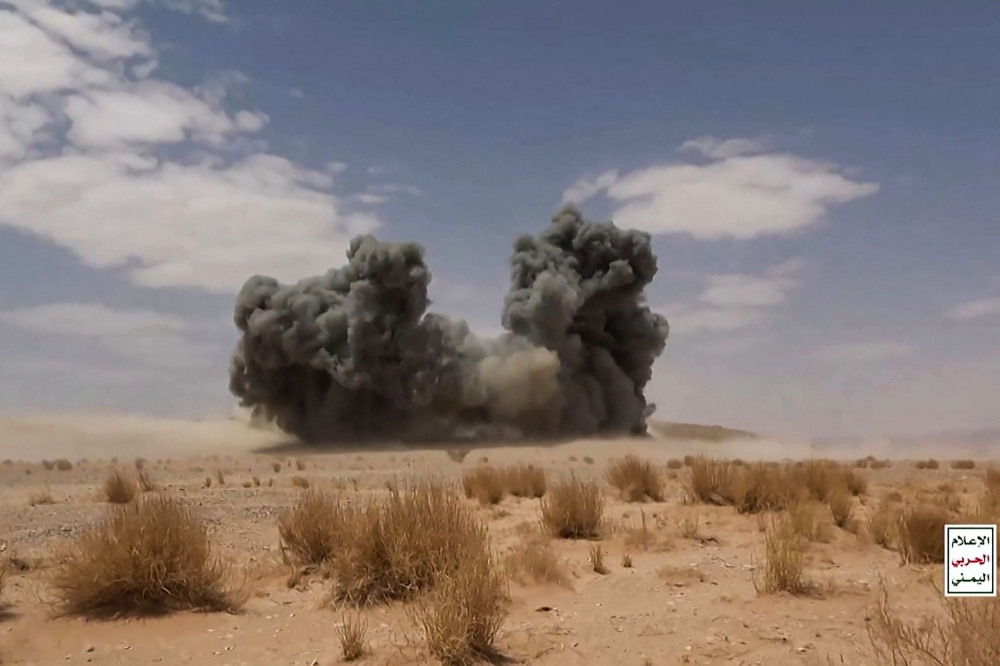
In Iraq’s Kurdistan region, the Guards said Iranian forces targeted US facilities in Erbil. Iranian state media reported that the strikes damaged a maintenance facility, warehouses and the guidance system of a US surveillance aerostat.
An AFP journalist reported hearing explosions close to Erbil airport, an area that hosts coalition forces.
Iran also claimed to have launched a ballistic missile attack against a US Marine training facility in Jordan near the Gulf of Aqaba.
Across the Gulf, the atmosphere was equally tense.
Air raid sirens were reported in Bahrain and Kuwait. Kuwaiti authorities said an Iranian drone caused a fire at a residential complex, although the blaze was brought under control and no casualties were reported.
The attacks demonstrate how quickly the conflict can spread beyond the borders of Iran and involve multiple countries across the region.
Wedding attack sparks anger in Iran
The deaths at the wedding gathering have become one of the most emotionally charged developments in the latest escalation.
Iranian officials strongly condemned the reported strike. Mohammad Bagher Ghalibaf, Iran’s top negotiator, sharply criticized Washington, using religious and highly charged language to describe the United States.
For families caught in the middle of the conflict, however, the political arguments offer little comfort.
A wedding is normally associated with celebration, family and hope for the future. The reported loss of lives at such an event has instead become another painful reminder of the human cost of war.
Behind every reported casualty is a family dealing with grief, uncertainty and questions that cannot easily be answered.
Washington warns of a stronger response
US President Donald Trump has warned Iran that further retaliation could bring an even more severe American response.
Following the initial US strikes, Trump described the operation as “large and powerful” and said it was carried out in response to what Washington described as Iranian actions involving the Strait of Hormuz and attacks against US military personnel.
Trump later warned that Iran would face a much stronger response if it continued retaliating.
The warnings have raised fears that the latest exchange could develop into an even broader confrontation.
Fighting puts the Strait of Hormuz under renewed pressure
One of the biggest concerns surrounding the conflict is the Strait of Hormuz, one of the world’s most important energy routes.
The waterway has become a major flashpoint in the conflict, with Iran maintaining pressure over maritime traffic while the United States pushes a counter-blockade against Iranian ports.
Before the war, roughly one-fifth of global oil supplies moved through the Strait of Hormuz, making any prolonged disruption potentially significant for international energy markets.
Iranian authorities have continued reporting incidents involving commercial vessels in the area.
The Revolutionary Guards said two oil tankers caught fire after striking mines, claiming the vessels had been encouraged by the US military to use what Iran described as an illegal route.
Such developments are likely to increase concerns among shipping companies, energy traders and governments watching the region closely.
More casualties reported in Iran
The latest US strikes have also resulted in additional casualties, according to Iranian state media.
IRNA reported that seven people were killed and eight others wounded in a missile attack in Khuzestan province.
The Revolutionary Guards separately said four members of its aerospace force were killed in a US strike in Kermanshah province.
Three paramilitary members were also reportedly killed during an attack on Lavan island in the Gulf.
With strikes continuing on both sides, the true scale of the casualties and destruction remains difficult to independently verify.
A conflict with no clear way forward
The latest escalation comes after weeks of uncertainty and follows the collapse of a fragile ceasefire between the United States and Iran.
The broader conflict began in late February with US-Israeli attacks against Iran, which reportedly killed Iran’s Supreme Leader Ayatollah Ali Khamenei.
Since then, military confrontations, attacks on commercial shipping and disputes surrounding the Strait of Hormuz have repeatedly threatened to push the region toward an even wider war.
Yet diplomacy has not completely disappeared.
Iranian President Masoud Pezeshkian said Iran would respond to US moves concerning a potential agreement aimed at ending the conflict. At the same time, he warned that renewed American pressure and threats could undermine diplomatic efforts.
That leaves the region facing a difficult contradiction: military escalation continues while diplomatic possibilities remain fragile.
The human cost is becoming harder to ignore
For governments, the conflict is being discussed in terms of military targets, strategic positions, missiles, drones and maritime routes.
For ordinary people, it looks very different.
It means families running for safety when sirens sound. It means communities waking up to explosions. It means parents worrying about their children and families mourning people who were simply in the wrong place at the wrong time.
The reported deaths at a wedding have brought that reality into sharp focus.
As Iran and the United States exchange increasingly serious threats, the biggest question is no longer only about who will launch the next strike. It is about whether leaders on both sides can find a way to prevent the conflict from becoming even more destructive.
The coming days could prove critical.
With military forces already engaged across multiple parts of the Middle East and the Strait of Hormuz remaining under intense pressure, every new attack carries the risk of triggering another round of escalation.
For millions of people across the region and around the world, the hope is simple: that diplomacy can eventually speak louder than missiles.