For millions of families across China, the annual Gaokao examination represents more than just a test—it symbolizes hope, ambition, sacrifice, and the pursuit of a better future.
On Sunday, approximately 12.9 million students across the country began taking the highly competitive national university entrance examination, known as the Gaokao. Widely regarded as one of the most demanding academic assessments in the world, the exam remains the primary gateway to higher education opportunities in China.
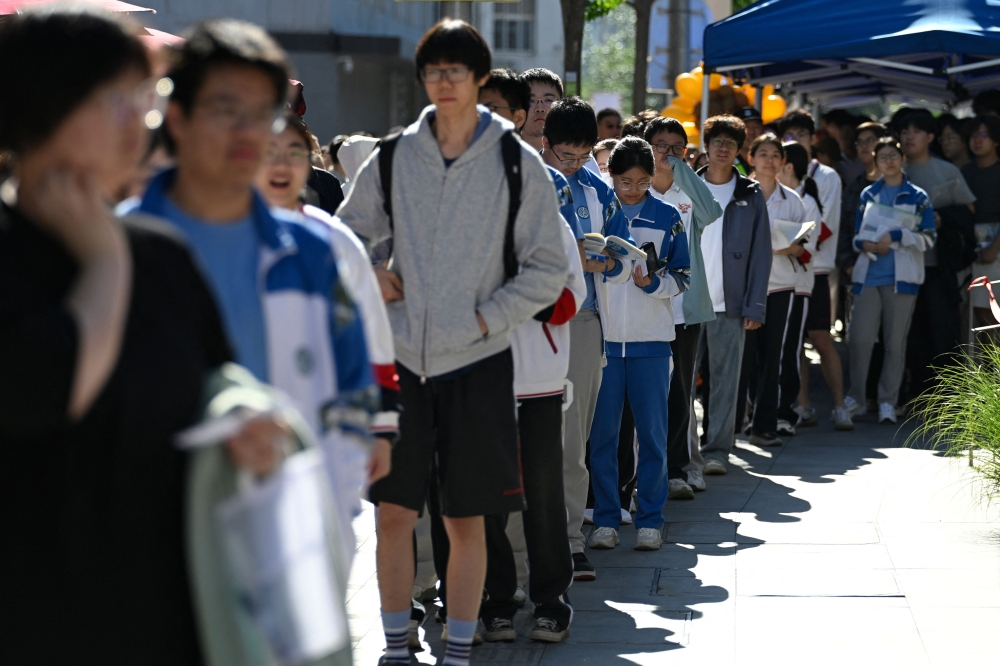
At a testing center in Beijing, students carrying identification cards and exam materials arrived early, accompanied by anxious parents eager to offer last-minute encouragement. Under clear blue skies, thousands of candidates prepared themselves mentally for the multi-day examination that could significantly influence their academic and professional futures.
Among them was 18-year-old Zhang Xinnan, who admitted feeling nervous before entering the examination hall.
“It’s my first time taking the Gaokao, so naturally I’m a little anxious,” Zhang shared. Despite his concerns, particularly about the essay section of the Chinese language exam, he expressed confidence after spending the past year rigorously preparing.
“The knowledge we needed to master has already been mastered,” he said. “The key is to walk in with confidence.”
Like many students of his generation, Zhang dreams of contributing to China’s rapidly growing new energy vehicle industry after completing his education.
Outside examination venues, families demonstrated traditional symbols of support and good fortune. Many parents wore red clothing, a color associated with luck and success in Chinese culture. Some educators carried oversized sunflower displays made from balloons, reflecting a popular Chinese expression associated with achieving success and reaching goals.
Security around examination centers remained tight. Authorities deployed police officers and security personnel to ensure smooth operations while preventing academic misconduct. Education officials have intensified anti-cheating measures this year, warning students against bringing smart watches, smart glasses, or other electronic devices into examination halls equipped with extensive video monitoring systems.
Education Expansion Meets Economic Reality
China’s higher education system has expanded dramatically over the past few decades. Economic growth has enabled more students than ever before to pursue university degrees, while parents increasingly view higher education as a pathway to long-term stability and career success.
However, the landscape awaiting graduates has become increasingly complex.
While obtaining a university degree remains highly valued, many young people now face a challenging labor market. Official statistics indicate that youth unemployment remains a significant concern, with approximately one in six Chinese citizens aged 16 to 24, excluding students, currently unemployed.
This reality has prompted families to rethink traditional attitudes toward academic achievement and career success.
A Shift in Priorities
For many parents, mental well-being and physical health are becoming just as important as examination scores.
Deng Ju, a mother waiting outside a Beijing examination center while her daughter completed the exam, reflected this growing mindset.
Holding study materials for her daughter, who was reviewing notes alongside a friend before the exam, Deng emphasized that maintaining balance matters more than chasing perfection.
“Just do your best and perform normally,” she said. “I care more about my daughter’s health than the exam itself.”
Unlike many families aiming for admission into China’s most prestigious institutions, such as Tsinghua University or Peking University, Deng’s family has adopted a more relaxed perspective regarding university selection.
She even suggested that, in an ideal world, the pressure surrounding the Gaokao could be reduced altogether.
Although she acknowledged such a change remains unlikely, her comments reflect a broader conversation taking place across Chinese society about educational pressure, student well-being, and alternative pathways to success.
Exam Questions Reflect a Changing Society
The Gaokao is known not only for assessing academic knowledge but also for encouraging students to engage with contemporary social issues and emerging technologies.
This year’s examination themes highlighted adaptation, innovation, and societal transformation.
In Beijing, one writing task asked students to create a promotional slogan for a volunteer event focused on introducing artificial intelligence technologies to senior citizens living in nursing homes.
Meanwhile, students in Shanghai were challenged to write an 800-word essay examining how technology continues to reshape both the world and human imagination.
These topics reflect China’s increasing focus on digital transformation, artificial intelligence, and the role of innovation in everyday life.
Dreams, Determination, and the Road Ahead
Despite concerns surrounding employment opportunities and academic competition, millions of students continue to view the Gaokao as a vital stepping stone toward achieving their personal ambitions.
For candidates like Zhang Xinnan, the examination remains a symbol of possibility rather than pressure alone.
His advice to fellow students was simple but powerful: maintain a calm mindset.
“The most important thing during the Gaokao is your mentality,” he said.
As the nation watches and waits for results later this month, millions of young people are taking one of the most significant steps of their lives—hoping their hard work, perseverance, and determination will open doors to the future they have imagined.
The 2026 Gaokao once again highlights the aspirations of a generation striving for success while navigating an evolving educational and economic landscape. For many students, the examination is not merely about university admission; it is about building a foundation for the future in a rapidly changing world.