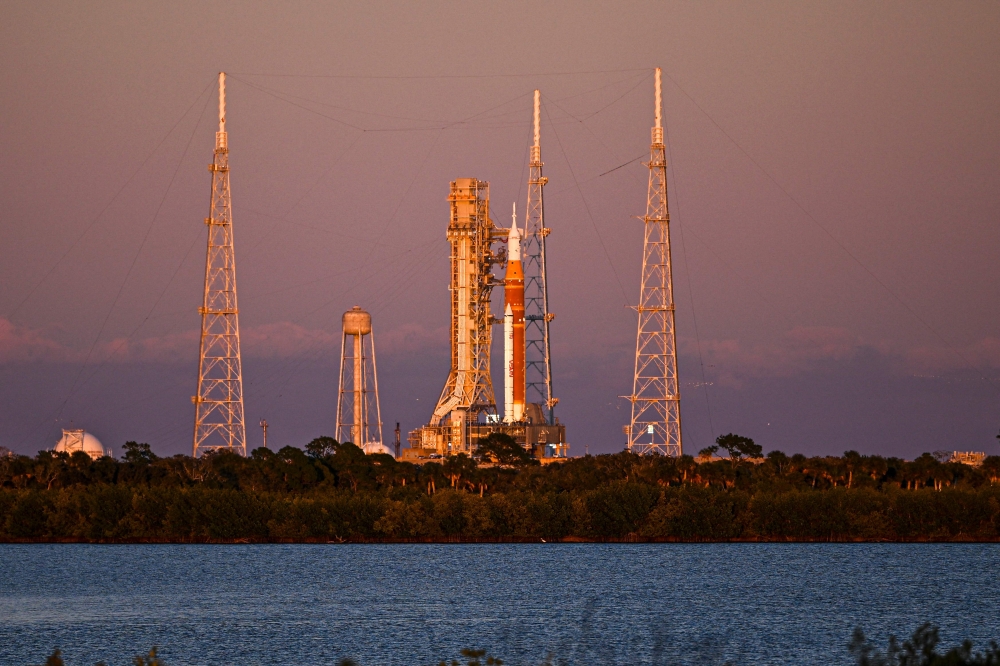
The dream of returning humans to the Moon has hit another unexpected pause.
NASA chief Jared Isaacman confirmed that the agency will no longer target a March launch window for the highly anticipated Artemis II mission — the first crewed lunar flyby in over five decades. The decision comes after engineers identified a technical issue involving helium flow within the massive Space Launch System (SLS) rocket.
The problem, discovered during final preparations, is significant enough to remove March from consideration entirely.
“I understand people are disappointed,” Isaacman shared in a public statement. “That disappointment is felt most by the team at NASA, who have been working tirelessly to prepare for this great endeavor.”
Technical Setback Grounds the SLS Rocket
The towering SLS rocket and the Orion spacecraft will now be rolled back into the Vehicle Assembly Building at Kennedy Space Center for further investigation and repairs.
This move follows the discovery of irregular helium flow — a critical component in maintaining pressure and functionality within the rocket’s systems. Engineers will conduct thorough inspections before NASA announces a revised launch timeline.
A detailed briefing is expected in the coming days.
Artemis II: A Historic Mission Delayed
Artemis II is designed to be a 10-day mission that will send three American astronauts and one Canadian astronaut on a flyby around the Moon. It will mark the first time humans travel beyond low Earth orbit since the Apollo era.
The mission represents a crucial step toward landing astronauts back on the lunar surface — a national goal re-emphasized during the presidency of Donald Trump.
NASA had previously set March 6 as the earliest possible launch date. Earlier announcements even suggested a February launch, reflecting urgency amid global competition.
The Global Space Race Intensifies
The delay also unfolds against a backdrop of growing competition. NASA aims to return astronauts to the Moon before China accomplishes its own crewed lunar landing, currently targeted for 2030 at the latest.
Meanwhile, China National Space Administration is advancing steadily. China plans to launch the uncrewed Chang’e 7 mission in 2026 to explore the Moon’s south pole, while testing of its next-generation crewed spacecraft, Mengzhou, is also underway this year.
A Program Marked by Delays
This is not the first hurdle for the Artemis program.
The uncrewed Artemis I mission eventually launched in November 2022 — but only after multiple postponements and two failed launch attempts.
Earlier this month, a liquid hydrogen leak disrupted a crucial “wet dress rehearsal” for Artemis II. That rehearsal — conducted under real launch conditions at Cape Canaveral — was finally completed after engineers resolved the issue.
Despite progress, technical complexity continues to test the timeline of America’s return to deep space.
Why the Moon Matters
NASA’s ambitions extend beyond planting a flag.
The Moon is viewed as a testing ground for future human missions to Mars. Learning how to sustain astronauts on another celestial body, develop life-support systems, and build infrastructure could pave the way for humanity’s next giant leap.
But space exploration has never been easy.
The Human Side of the Delay
Behind the towering rockets and billion-dollar budgets are thousands of engineers, technicians, scientists, and astronauts who have devoted years to making this mission possible.
Disappointment is real — not only for the public eager to witness history, but for the teams working around the clock inside assembly buildings, simulation labs, and launch control rooms.
Space history reminds us of one truth: breakthroughs are built on setbacks.
In the 1960s, when NASA achieved what many thought impossible, progress came through repeated challenges. The journey back to the Moon is proving no different.
For now, Artemis II waits — grounded but not defeated.
The mission is delayed, not abandoned. And when it finally launches, it will carry not only astronauts — but decades of ambition, resilience, and the shared human desire to explore what lies beyond our world.