
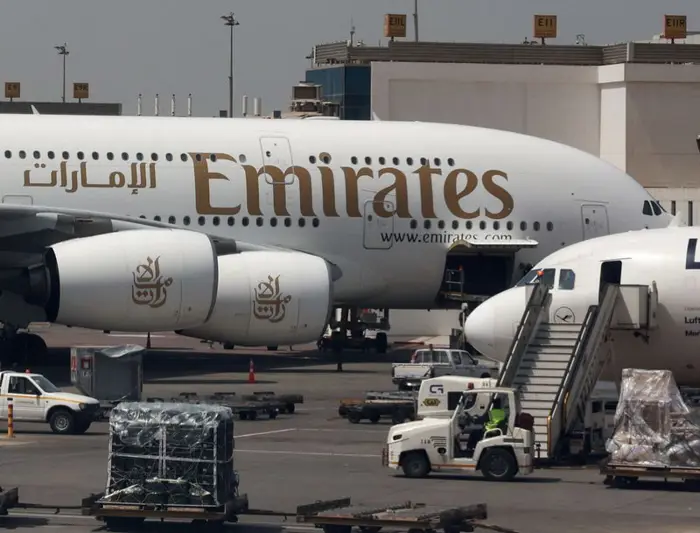
Emirates airline has reported a sharp 66% decline in first-half net profit for the 2026–27 financial year, as the ongoing US-Israeli conflict with Iran continues to disrupt air travel across the Middle East and push jet fuel prices higher.
The Dubai-based airline recorded a net profit of 3.3 billion dirhams (approximately $903 million) for the six months ending September 30, compared with a significantly stronger performance during the same period last year. Revenue also declined by 13% to 56.9 billion dirhams, despite continued demand for international travel and a solid contribution from its cargo operations.
The conflict has created serious challenges for airlines operating across the region. Intermittent airspace closures, flight cancellations, delays and unexpected diversions have affected travel schedules, forcing carriers to adjust their operations while managing rising costs and uncertainty.
Although several major Gulf airlines have gradually resumed services, the situation remains unpredictable. Recent attacks on Saudi Arabia by Yemen’s Iran-aligned Houthis have added further concerns about regional stability and the pace of recovery for the aviation industry.
In a statement, Emirates Group acknowledged that the first six months of the 2026–27 financial year had brought considerable operational difficulties. The company said airspace restrictions, government travel advisories and changing passenger travel patterns had tested its ability to maintain smooth operations.
Despite these challenges, Emirates reported that it had restored approximately 91% of its pre-disruption flight network by the end of September, demonstrating efforts to maintain connectivity and rebuild its operations.
However, passenger capacity and travel figures continued to reflect the impact of the crisis. Available seat kilometres, a standard aviation industry measure of passenger-carrying capacity, declined by 17% during the six-month period.
The airline’s average passenger seat factor also fell to 72%, compared with 79.5% during the corresponding period last year. Emirates carried 21.8 million passengers, representing a 22% decline from the previous year’s first-half figure.
For an airline with a global network and a major role in connecting international destinations, these figures highlight how quickly geopolitical tensions can affect the aviation business. Even when passenger demand remains strong, disrupted routes, higher fuel expenses and operational uncertainty can put significant pressure on profitability.
The coming months will be important for Emirates as it works to restore normal operations, rebuild passenger confidence and manage the financial impact of an uncertain regional environment. Its recovery will depend not only on the airline’s operational strength but also on how quickly stability returns to Middle Eastern airspace.
The bigger picture is clear: global aviation is closely connected to geopolitical stability. When conflict disrupts major travel routes, the consequences reach far beyond airlines, affecting passengers, tourism, international business and the wider global economy.
Source: Reuters


