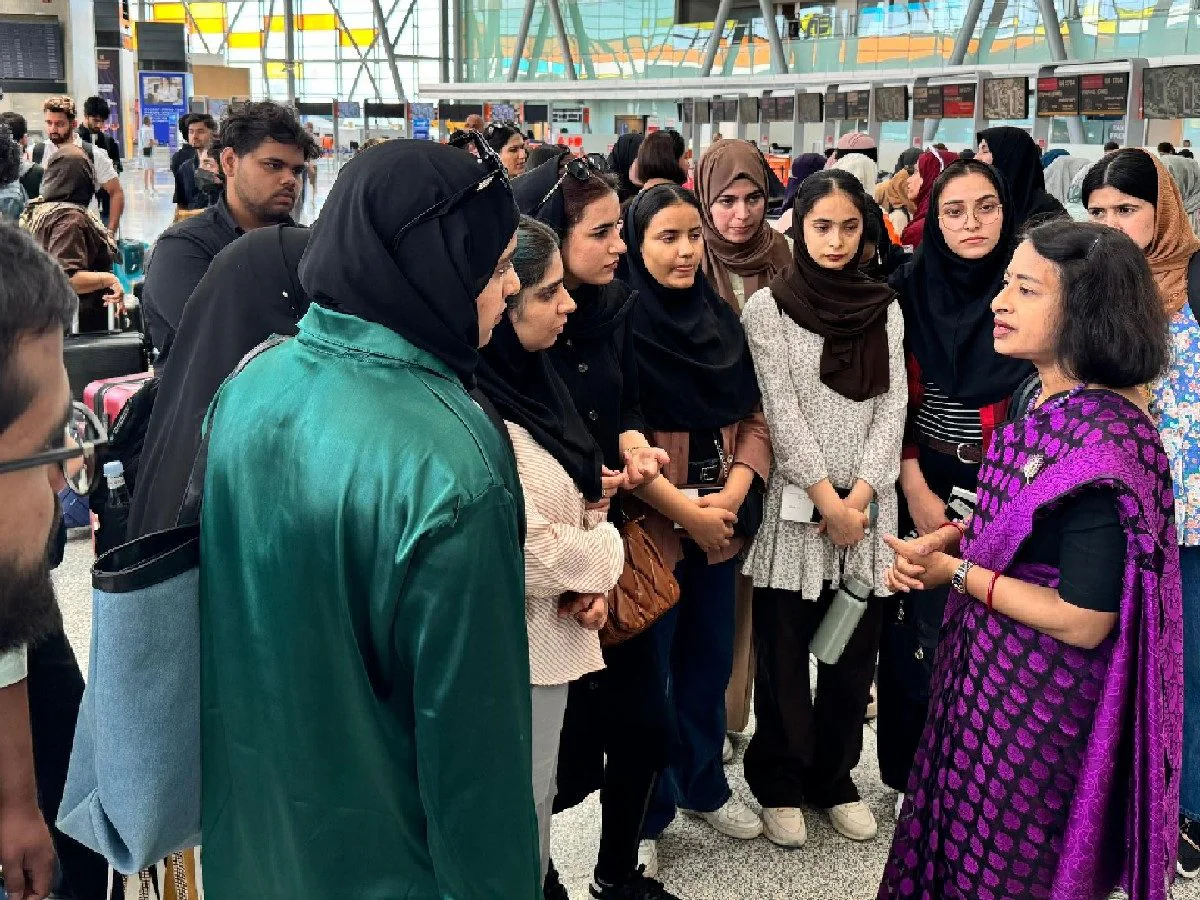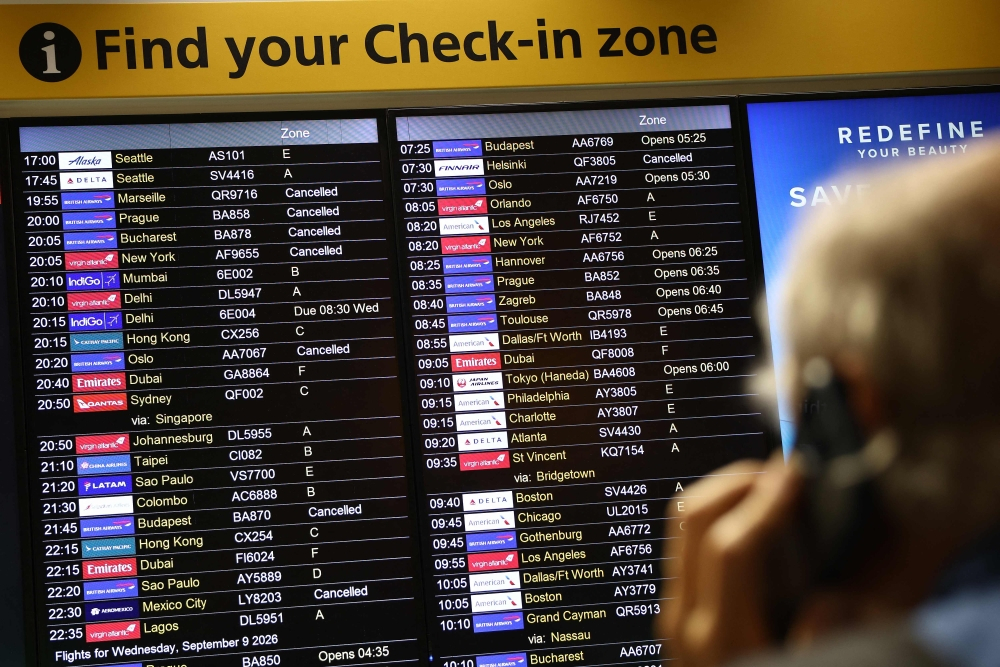
Air travellers across the United Kingdom faced another difficult day Wednesday as hundreds of flights were cancelled following a major technical failure within the country’s air traffic control system. The disruption left passengers stranded at airports, facing long delays, cancelled journeys, packed terminals and growing uncertainty about when they would finally reach their destinations.
Nearly 400 flights were cancelled Wednesday, adding to the 1,746 cancellations recorded the previous day. According to aviation analytics firm Cirium, a large share of the latest cancellations involved flights arriving at or departing from London Heathrow, one of Europe’s busiest airports.
The scale of the disruption has been enormous. Airlines UK estimated that more than 330,000 passengers were affected across the two days. Around 155,000 travellers had their flights cancelled, while approximately 180,000 others experienced delays. For many passengers, the problem was not simply a missed flight. It meant missed connections, unexpected accommodation costs, lost time and exhausting hours spent waiting inside overcrowded airports.
For honeymooner Matt Ernster, 28, the journey home from Paris to Boston via Heathrow became an experience he described as the worst travel experience of his life. Speaking to AFP, he said he and his fellow passengers remained on their aircraft for more than five hours before being allowed to leave.
What followed was even more chaotic. Ernster described the airport as a gigantic and chaotic scene, while the baggage collection area felt almost apocalyptic. Finding accommodation was another challenge, with no hotels available within roughly a two-hour radius.
His experience reflects the frustration felt by thousands of passengers who had little control over what was happening. People who had planned their journeys weeks or months in advance suddenly found themselves waiting without clear answers, often surrounded by other exhausted travellers facing exactly the same problem.
The National Air Traffic Services, known as NATS, has ruled out a cyberattack as the cause of the disruption. NATS chief executive Martin Rolfe said the organisation did not believe the incident was caused by cyber activity and promised a thorough investigation into what went wrong.
“We don’t believe it was a cyberattack,” Rolfe told BBC radio, while stressing that investigators would examine the incident carefully to determine the precise cause.
The disruption has also placed intense pressure on Britain’s aviation authorities and airlines. British Airways said it had cancelled nearly 550 flights because of the incident, including around 200 on Wednesday. The airline estimated that approximately 85,000 of its customers were affected.
For the British aviation industry, the latest breakdown has revived concerns about the resilience of the country’s air traffic infrastructure. Britain experienced another major technical disruption in July last year, when numerous flights were cancelled, causing widespread frustration among airlines and passengers.
The country also suffered a much larger air traffic systems failure in 2023. That incident affected more than 700,000 passengers after hundreds of flights were delayed or cancelled, making the latest disruption another reminder of how quickly a technical problem can ripple through an entire aviation network.
Transport Secretary Heidi Alexander told MPs that she did not believe the latest failure should simply be accepted as unavoidable. After meeting with NATS chief Martin Rolfe, she announced that an independent review would investigate what caused the disruption and examine how the UK can make its air traffic control systems more reliable.
The review is expected to report within six months.
Rolfe has accepted full responsibility for the disruption but has not indicated whether he is considering resigning. His position has already attracted criticism from the airline industry. Ryanair chief operations officer Neal McMahon called for Rolfe to be removed, accusing him of failing UK travellers.
Meanwhile, passengers continued to deal with the human consequences of the technical failure.
At London Gatwick Airport, healthcare worker Josie Donoghue described her experience as an “absolute nightmare” after spending three hours stuck on the runway before being forced to leave her flight to Ireland.
She told the Press Association that navigating the airport afterwards felt like trying to escape Alcatraz.
Other travellers faced even more difficult choices. Susie Senahe, 55, was travelling back to Accra, Ghana, after visiting her daughter in Britain when her journey was disrupted. After being rebooked onto a Friday flight, she said she was preparing to sleep inside Heathrow Terminal until she could finally continue her journey.
Another passenger travelling to the United States said she had already spent Tuesday night sleeping at the airport because nearby hotels were completely booked.
These stories reveal something that statistics cannot fully capture. Behind every cancelled flight number is a person. It may be someone returning home after visiting family, a patient travelling for medical care, a worker trying to get back to their job, a student beginning a new chapter, or a family whose long-awaited holiday has suddenly turned into an airport ordeal.
Passengers may also face another disappointment when it comes to financial compensation. The aviation regulator has indicated that travellers may not be entitled to compensation if the disruption is classified as an extraordinary circumstance under passenger rights rules.
The impact was not limited to Heathrow and Gatwick. Manchester, Birmingham and Edinburgh airports were also affected, particularly during Tuesday’s disruption. Dublin Airport also reported dozens of cancellations linked to the wider air traffic problems.
Ryanair said more than 65,000 of its passengers had been affected, with 50 flights cancelled, most of them on Tuesday.
The immediate priority now is getting passengers moving again. But the bigger question is whether Britain’s air traffic control infrastructure is sufficiently prepared to prevent another failure of this scale.
Technical systems are an invisible part of modern air travel. Most passengers never think about them when they check in, board an aircraft and look forward to arriving at their destination. Yet when those systems fail, the consequences become impossible to ignore.
This disruption is therefore about more than cancelled flights. It is a test of confidence in the infrastructure that keeps millions of people moving. Travellers need more than apologies after a crisis. They need systems that are resilient, transparent investigations when failures happen, and meaningful action to prevent the same problems from happening again.
For the passengers who spent hours trapped on aircraft, slept on airport floors or searched desperately for unavailable hotel rooms, the issue is deeply personal. A flight may be just a number on an airline schedule, but for the person sitting in the terminal, it can represent a family reunion, a business commitment, a medical appointment, a dream holiday or simply the basic hope of getting home.
And that is why the real measure of this crisis will not only be how quickly the flight schedules return to normal. It will be whether the lessons from this failure are strong enough to make sure thousands of passengers do not have to live through the same nightmare again.