India’s capital became the center of the world’s attention this week as Prime Minister Narendra Modi welcomed an unprecedented gathering of global leaders, technology pioneers and industry visionaries to the AI Impact Summit. Among the speakers were Sam Altman, CEO of OpenAI; Bill Gates, co‑founder of Microsoft; and Demis Hassabis, head of Google DeepMind — all sharing insights on how artificial intelligence might reshape everything from jobs to global ecosystems.
The rapid rise of so‑called generative AI has brought huge boosts in profits and innovation, but it has also raised tough questions. Could AI replace millions of jobs? How should society manage the risks that come with machines that can mimic human behavior? These were themes echoed by experts like computer scientist Stuart Russell, who shared concerns about machines taking on roles once filled by people.
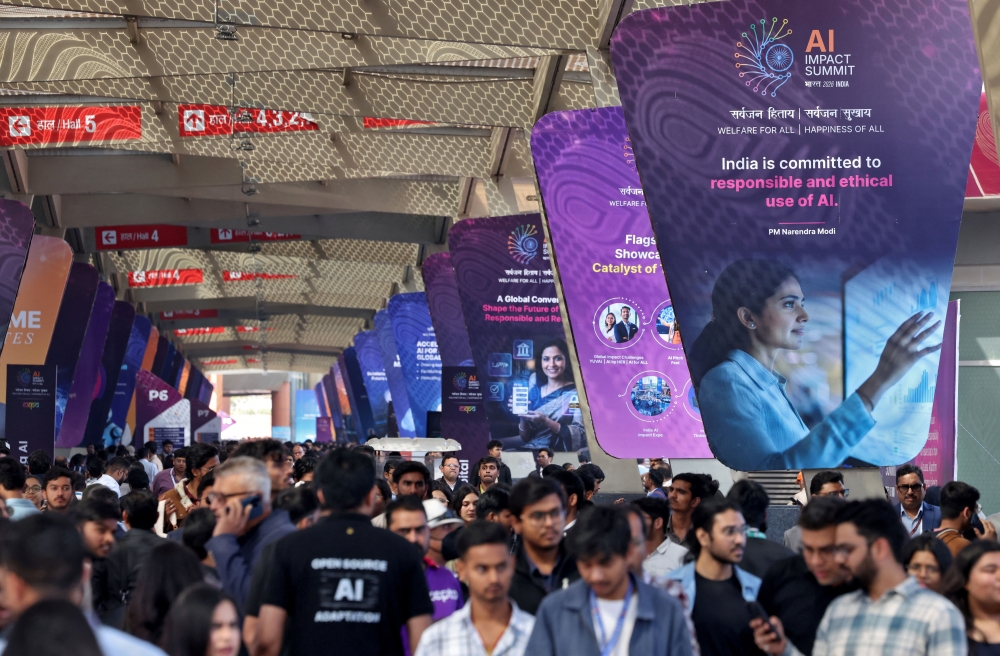
This year’s summit — the fourth in the international series — is the largest yet. Tens of thousands of participants from around the world filled New Delhi’s halls, where global leaders, including French President Emmanuel Macron, joined Modi to discuss collaboration, technology and economic partnerships. The two leaders also met in Mumbai this week to reaffirm the strength of India‑France ties, which leaders described as critical for global stability. A potential multibillion‑dollar deal for 114 Rafale fighter jets was also a subject of conversation among officials.
For India, hosting the first global AI summit in a developing nation has been both a milestone and an opportunity. Government officials announced expectations of over US$200 billion in AI‑related investments over the next two years, as major U.S. tech companies such as Google and Nvidia unveiled new commitments to build infrastructure and foster local innovation.
“From my early days growing up in Chennai, I’ve seen India transform,” said Google CEO Sundar Pichai, underlining his company’s commitment to supporting India’s AI trajectory, including by building subsea internet cables as part of a US$15 billion investment.
Tech giant Nvidia also announced partnerships with Indian cloud providers to build powerful data centers capable of training advanced AI systems. But the global rush to build and power these centers has also raised environmental concerns, including the strain they put on electricity and water resources at a time when countries are trying to cut carbon emissions.
Despite India’s leaps — recently rising to third place in a global AI competitiveness ranking — experts emphasize that the country still faces challenges in matching the scale of AI development in the United States and China.
International dignitaries like Brazilian President Luiz Inacio Lula da Silva traveled to Delhi to join the discussions, including talks on critical materials like rare earth elements. But not everything has gone smoothly. Delhi’s streets experienced heavy congestion, and summit organizers faced criticism over overcrowded entry points and logistical hiccups.
As the summit draws to a close, leaders are expected to issue a collective statement outlining how the world might guide AI’s development. Yet some observers caution that previous summits have offered broad visions more than actionable commitments, leaving activists and researchers urging stronger international agreements on issues such as deepfake abuse, AI‑driven scams, and privacy intrusion.
Young innovators at the event also shared mixed feelings about AI’s role. Siddharth Soni, founder of an AI‑designed jewelry startup, highlighted both promise and loss: while AI can unlock creativity and efficiency, it can also diminish the role of traditional artisans and the human touch in artistic expression.