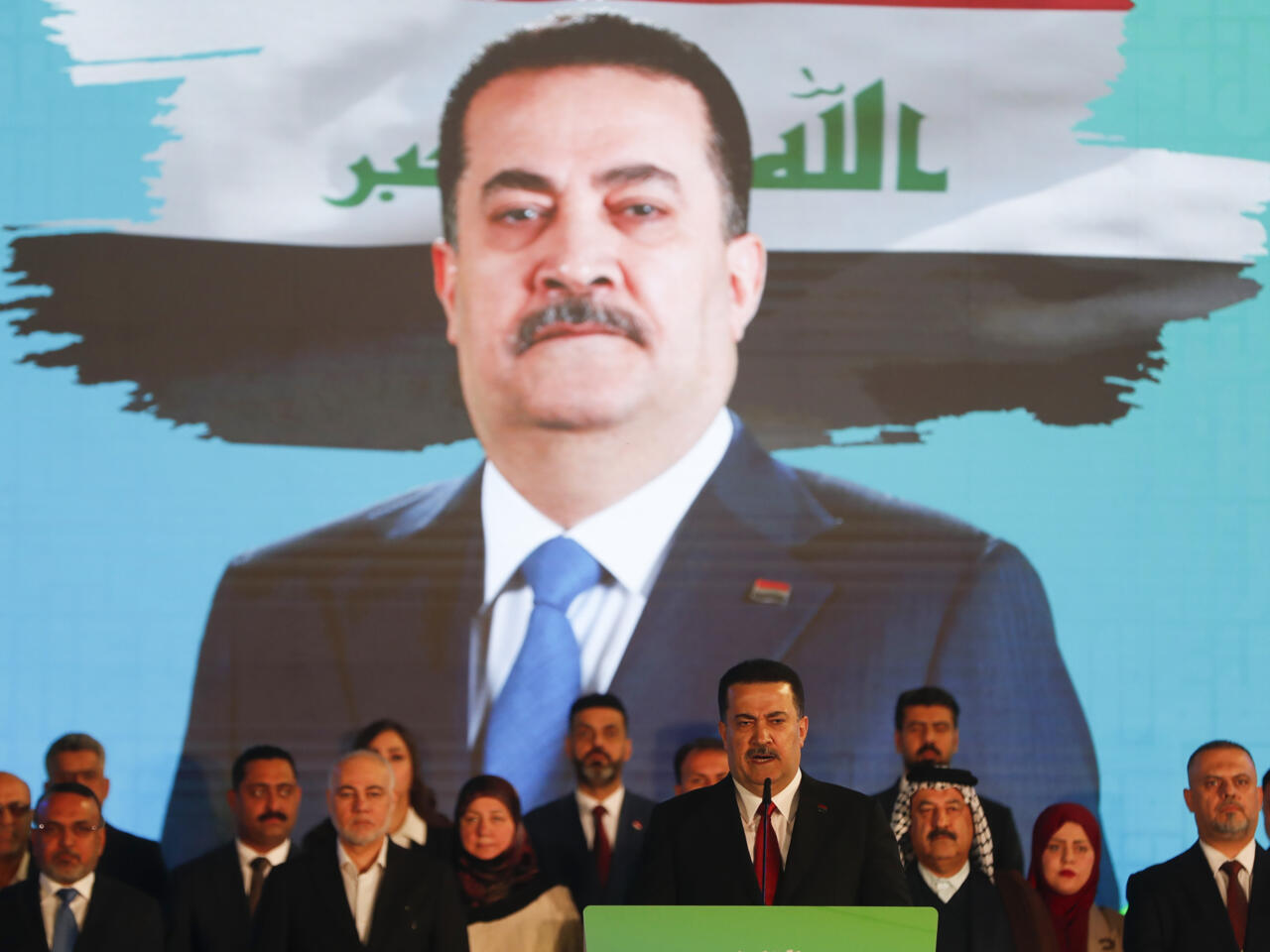
Iraq’s incumbent Prime Minister Mohammed Shia al-Sudani has declared victory for his coalition after preliminary results from the country’s general election revealed a decisive lead. Supporters of Sudani, who is seeking a second term, gathered late Tuesday night in Baghdad’s Tahrir Square to celebrate with fireworks, music, and chants of optimism.
In a televised address, Sudani framed the win as a triumph for all Iraqis, congratulating citizens on the success of his coalition, Reconstruction and Development. He expressed heartfelt gratitude on social media, thanking the Iraqi people for their unwavering support.
Tuesday’s election came at a rare moment of relative calm for Iraq, a nation often marred by conflict. Voter turnout was strong, with over 12 million Iraqis participating out of 21 million eligible voters—even as influential Shiite cleric Moqtada Sadr encouraged a boycott.
The preliminary results show Sudani’s list leading with more than 1.3 million votes, approximately 217,500 more than the next closest list. While vote counts by province are out, official parliamentary seat allocations are yet to be announced. Analysts estimate Sudani’s coalition may secure around 50 seats out of 329, setting the stage for intense post-election negotiations.
Forming a government in Iraq is rarely straightforward. The prime ministership is traditionally held by the Shiite majority, the speaker of parliament by a Sunni, and the largely ceremonial presidency by a Kurd. No single list typically gains an outright majority, making coalition-building critical. Past governments have relied on compromise deals among Shiite-majority parties to ensure stability.
Sudani, who rose to prominence three years ago with the backing of pro-Iran Shiite parties, has pledged to continue the path of “reconstruction and development.” Under his tenure, Baghdad has seen significant infrastructure improvements, including new tunnels, bridges, and urban projects. Yet he faces the ongoing challenge of balancing Iraq’s delicate relations with both the United States and Iran amidst recent regional upheavals.
While some Iraqis remain skeptical, fearing that elections serve only political elites, Sudani’s supporters remain hopeful. The streets of Baghdad, filled with celebration, reflect the yearning of many Iraqis for tangible change, improved public services, and a more stable future.