
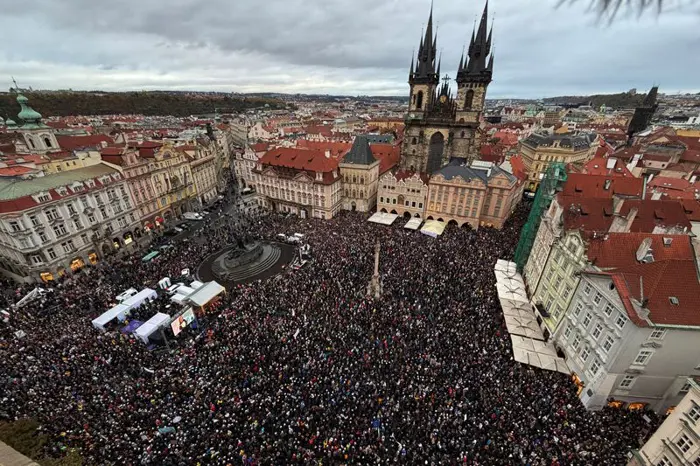
Czech public television and radio workers staged a one-day strike on Tuesday, protesting against proposed government changes to their funding system. The journalists and media employees say the plans could weaken the independence of public broadcasting and expose news coverage to political influence.
The strike disrupted regular broadcasting, drawing attention to growing tensions between the government and the country’s public media institutions. Demonstrations involving artists, students and members of the public were also planned for Tuesday afternoon in support of independent journalism.
At the centre of the dispute is a government proposal to replace the existing broadcasting fee system with funding directly from the state budget. Under the current arrangement, households pay a monthly broadcasting fee of 205 Czech crowns (approximately $9.43), which helps finance public television and radio.
Media workers fear that transferring this responsibility to the government could make broadcasters more vulnerable to political pressure, particularly when annual budgets are being decided.
The protest has intensified a wider debate about the future of public broadcasting in the Czech Republic. A 2025 Reuters Institute survey found that Czech public television and radio were among the country’s most widely followed and trusted news sources, highlighting the importance of their role in providing reliable information.
The impact of the strike was visible on Czech Television’s 24-hour news channel. Viewers saw a darkened newsroom, while presenters dressed in black delivered their reports using an unusually prepared script, making the protest visible to audiences across the country.
The proposed changes have also attracted criticism from opposition parties, which have drawn comparisons with media reforms introduced in Hungary under former Prime Minister Viktor Orban. Critics argue that weakening independent funding structures could gradually create opportunities for political influence over public media.
The government’s coalition, led by billionaire Prime Minister Andrej Babis and supported by the far-right SPD and eurosceptic Motorists parties, has repeatedly criticised both private and public media, accusing them of biased reporting.
Czech Television reporter Jan Molacek, who is part of the strike committee, warned that the proposed legislation could give the governing coalition greater influence over editorial decisions.
He argued that the issue goes beyond financial arrangements, raising serious concerns about whether journalists will be able to report freely without political interference.
The legislation passed an initial parliamentary vote last month and is now awaiting further debate. Critics have also questioned the way the proposal was introduced, noting that government parties unexpectedly presented the bill on a Friday, leaving limited time for discussion before an early Saturday morning preliminary vote.
Another major concern is the proposed 15% reduction in funding. According to media representatives, the cuts would bring Czech Television’s nominal budget back to approximately its 2008 level, while radio funding would fall to figures last seen in 2005. Broadcasters have described these reductions as financially unsustainable.
Prime Minister Babis defended the government’s position on Monday, saying the changes were part of an election promise to reduce the financial burden on households.
He rejected claims that the government intended to take control of public broadcasting, insisting that there was no attempt to undermine democracy or place the media under state control. He also indicated that adjustments to the proposed legislation could still be considered during parliamentary discussions.
However, striking journalists say financial reform should not come at the expense of editorial independence. Molacek acknowledged that changes to the funding model could be discussed, but stressed that any new system must involve proper consultation, transparent decision-making and strong legal protections against political interference.
The bigger question: Can public media remain independent when its funding depends on political decisions?
The dispute in the Czech Republic highlights an issue that reaches far beyond its borders. Independent journalism depends not only on the freedom to report, but also on financial structures that protect news organisations from pressure and interference.
Public broadcasting plays an important role in keeping citizens informed, holding powerful institutions accountable and giving people access to different perspectives. Protecting that responsibility requires more than promises from political leaders. It requires transparent funding, strong safeguards and respect for editorial freedom.
As parliamentary discussions continue, the future of Czech public television and radio will remain an important test of how a democracy protects independent journalism.


