China’s military has revealed a new artificial intelligence powered system designed to enhance the coordination and safety of aerial refuelling operations. The development comes shortly after a United States military tanker crash in the Middle East, drawing global attention to the challenges and risks involved in complex air missions.
According to reports published by the South China Morning Post, the People’s Liberation Army has rolled out an advanced platform known as the aerial refuelling area management system. The system was created by technicians within the PLA Air Force and was tested during military training exercises late last year. Official details were later shared through PLA Daily.
The goal of this new system is to streamline how tanker aircraft and fighter jets connect during refuelling missions. By relying on real time operational data and intelligent algorithms, the technology is intended to help commanders and pilots make faster and more accurate decisions while in the air.
The AI powered programme continuously monitors airspace conditions while also tracking the fuel status of aircraft participating in the mission. Using this information, it calculates the most efficient pairing between tanker aircraft and fighter jets. Factors such as remaining fuel, flight time and available airspace are all considered before recommendations are sent to pilots.
Military officials involved in the project explained that this smart assignment feature provides highly efficient and carefully calculated solutions. The intention is to maximise the effectiveness of aerial refuelling missions while reducing delays and operational strain on specific tanker aircraft.
In earlier operations, the process relied heavily on manual coordination. Tankers would remain in designated zones while fighter jets approached the closest available tanker for refuelling. While functional, this approach sometimes created congestion, with certain tankers receiving too many aircraft while others remained underused. Over time, this imbalance could slow missions and reduce overall operational efficiency.
The newly introduced system aims to solve that issue by distributing aircraft more evenly and planning refuelling operations in advance using data driven insights. Military analysts believe that such technology could play an important role in future air operations, especially during long distance or high intensity missions where timing and precision are critical.
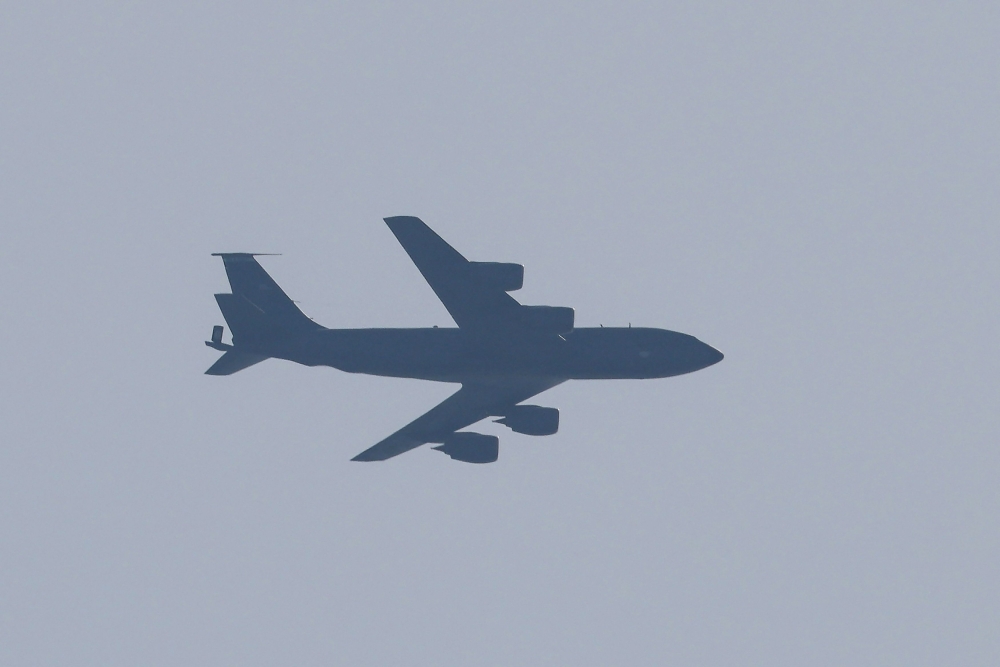
The announcement gained additional attention because it came shortly after a US Air Force Boeing KC 135 Stratotanker crashed in western Iraq during Operation Epic Fury. Reports indicated that six crew members lost their lives in the incident. Officials from the Pentagon said that the crash did not appear to involve hostile or friendly fire, although claims from a pro Iranian militant group suggested otherwise.
Early reports also indicated that the crash might have been linked to a mid air collision involving another KC 135 tanker. That aircraft reportedly suffered damage but was able to land safely. Investigations into the incident continue as military authorities review the circumstances surrounding the accident.
Chinese state broadcaster CCTV also featured commentary from military analyst Du Wenlong, who noted that the US KC 135 fleet has been in service for decades. Many of these aircraft were originally built during the 1950s and 1960s. According to analysts, frequent long distance deployments to high tension regions may increase mechanical strain and operational risks over time.
Du also referenced a historical incident from 1966 in which a KC 135 collided with a B 52 bomber during an aerial refuelling operation. The accident resulted in the bomber releasing hydrogen bombs, which led to radioactive contamination in the area. The incident remains one of the most serious accidents associated with aerial refuelling operations.
The broader discussion around these developments highlights how modern militaries are increasingly turning to artificial intelligence to improve safety, reduce human workload and strengthen operational planning. As aviation missions grow more complex and global tensions continue to shape defence strategies, technology driven solutions are becoming an essential part of military planning.
At the human level, stories like these remind us that behind every aircraft, every system and every mission are real people — pilots, engineers, technicians and families waiting for their loved ones to return safely. While technology continues to evolve, the ultimate goal remains the same: protecting lives while ensuring missions are carried out as safely and efficiently as possible.