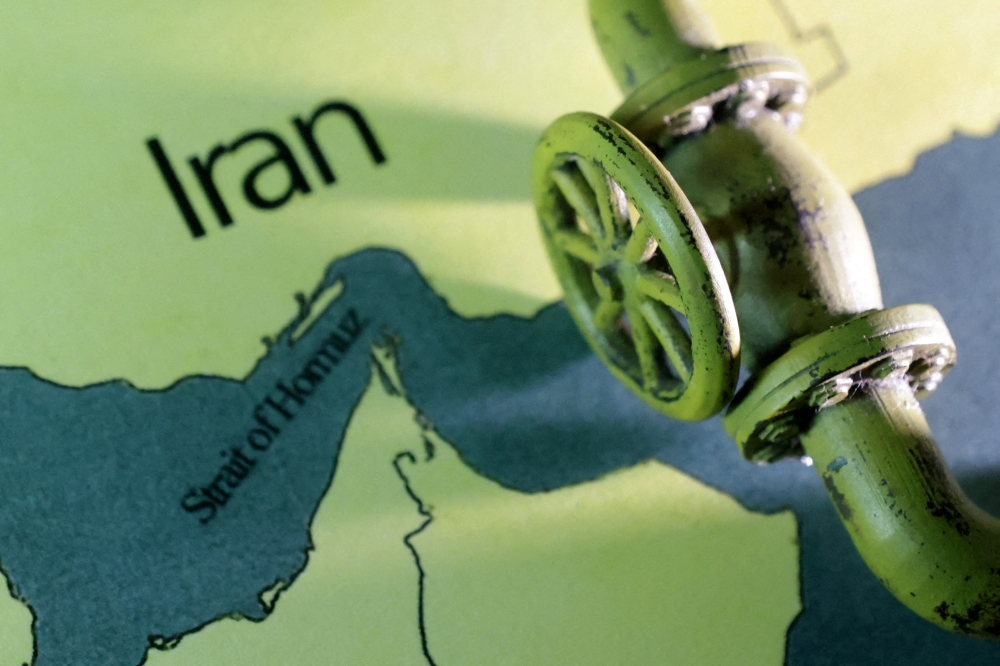
Recent US intelligence indicates that Iran has little intention of easing its grip on the Strait of Hormuz anytime soon, a key artery for the world’s oil trade. Sources familiar with the matter say Tehran views its control over the waterway as its most powerful bargaining chip against the United States.
The reports suggest Iran may continue to use the strait to influence global energy prices, pressuring US President Donald Trump to seek a swift resolution to a conflict now entering its fifth week—one that is increasingly unpopular with American voters.
Experts warn that the war, aimed at weakening Iran militarily, may inadvertently boost Tehran’s regional influence by demonstrating its ability to threaten one of the world’s most vital shipping lanes.
Trump has tried to downplay the challenge of reopening the strait, which handles a fifth of global oil shipments. He recently suggested he could order US forces to reopen the passage, posting on Truth Social that with “a little more time, we can easily OPEN THE HORMUZ STRAIT, TAKE THE OIL, & MAKE A FORTUNE.”
However, analysts caution that using force against Iran—controlling one side of the strait—could be extremely costly and risk a prolonged conflict. “In the attempt to try to prevent Iran from developing a weapon of mass destruction, the US handed Iran a weapon of mass disruption,” said Ali Vaez, director of the Iran Project at the International Crisis Group. He noted that Iran’s ability to influence global energy markets may be “much more potent than even a nuclear weapon.”
While Trump has made reopening the strait a precondition for a ceasefire, he has also urged Gulf states and NATO allies to take the lead. A White House official, speaking anonymously, said Trump is confident the strait will soon reopen but acknowledged that other nations have more at stake in ensuring the passage remains free.
Since February 28, Iran’s Islamic Revolutionary Guard Corps has used tactics ranging from attacking civilian vessels and deploying mines to demanding passage fees, effectively disrupting shipping and sending oil prices to multi-year highs. This surge in energy costs could exacerbate inflation in the US, adding political pressure on the president ahead of mid-term elections.
Intelligence sources say Iran is unlikely to relinquish this leverage soon. “Now that Iran has tasted its power over the strait, it won’t give it up lightly,” said one source, requesting anonymity.
Military experts caution that any attempt to reopen the strait is fraught with risk. The narrow shipping lanes make both ships and troops vulnerable, and even if US forces control key points along the coast, Iran could maintain influence through drones and missiles. Charging passage fees could also help Tehran fund post-war reconstruction while retaining strategic leverage.
Former CIA Director Bill Burns emphasized that Iran’s control over the strait is likely to be a central element in any peace negotiations, giving the country both deterrence power and potential economic benefits.
At its core, the situation highlights a complex truth: while military action is one path, the human and economic consequences make diplomacy a critical, if delicate, tool. The people who rely on the Strait of Hormuz for fuel, livelihoods, and daily life—both in the Gulf region and far beyond—are the ones most affected by decisions made thousands of miles away.