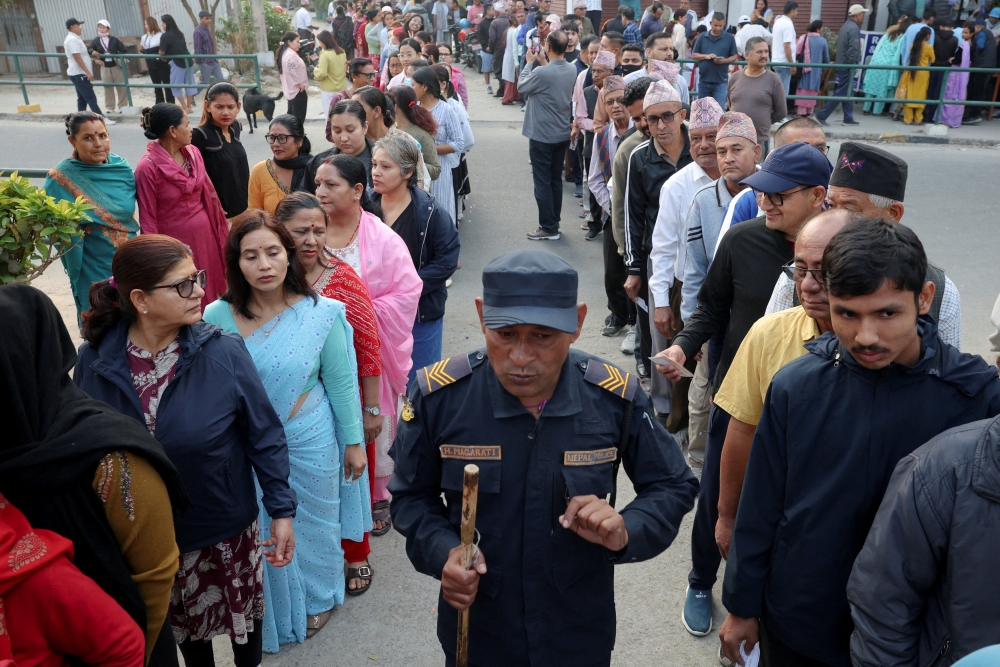
Nepal witnessed a historic moment on Thursday as citizens cast their votes for a new parliament, marking a high-stakes contest between entrenched veteran leaders and a rising youth movement. This election comes just six months after the deadly anti-corruption protests that toppled the previous government and shook the nation.
In the capital, Kathmandu, and in the usually quiet eastern town of Jhapa, voters lined up at dawn, eager to exercise their democratic right. Jhapa has become the focus of national attention as it hosts a head-to-head battle between key prime ministerial contenders.
“I came here early because we must exercise our rights. Nepalis have been waiting for meaningful change for so long, moving from one system to another,” said Nilanta Shakya, 60, at a polling station in Kathmandu. “I hope this time, our voices really matter.”
The Candidates and the Stakes
The election sees a diverse set of candidates vying for leadership. KP Sharma Oli, the 74-year-old Marxist former prime minister, seeks a return to power. He faces formidable opposition from Balendra Shah, 35, a former rapper turned mayor, championing the youth vote and promising political reform. Meanwhile, Gagan Thapa, 49, newly elected head of the Nepali Congress, aims to dismantle the entrenched veteran leadership.
Nearly 19 million Nepalis are choosing who will replace the interim government installed after the September 2025 uprising, which claimed at least 77 lives and saw parliament buildings and government offices torched. What began as a Gen Z-led protest against a brief social media ban grew into a nationwide call for accountability, transparency, and an end to economic stagnation.
Security and Voter Confidence
Interim Prime Minister Sushila Karki assured citizens that they could vote safely. “People can vote without fear,” she said, as thousands of soldiers and police were deployed to polling stations. She urged for a peaceful election, emphasizing that “this vote will determine our country’s future.”
Polling will close at 5 p.m. local time (11:15 GMT), with results expected in stages. Chief Election Commissioner Ram Prasad Bhandari confirmed that some preliminary results could be available within 24 hours, though full results and coalition negotiations may take longer.
The Spirit of Change
Voters expressed hope and excitement, particularly among older citizens embracing the youth-driven momentum. “Today feels like a day of celebration,” said 50-year-old housewife Nirmala Bhandari, dancing in the streets of Bhaktapur after casting her ballot. “I am hopeful we will have new leaders and build a better nation.”
Helicopters delivered voter materials to remote mountain regions, including areas around Mount Everest, ensuring all eligible voters could participate. However, attention remains focused on the southern plains near Kathmandu, where all three prime ministerial hopefuls are contesting key constituencies.
“This time, we hope for good governance and no corruption,” said 66-year-old Tek Bahadur Aale in Jhapa, reflecting the widespread demand for political accountability.
With over 3,400 candidates contesting 165 directly elected seats in the 275-member House of Representatives, Nepal’s voters are making a profound statement: the desire for change is strong, and the youth will shape the nation’s future.