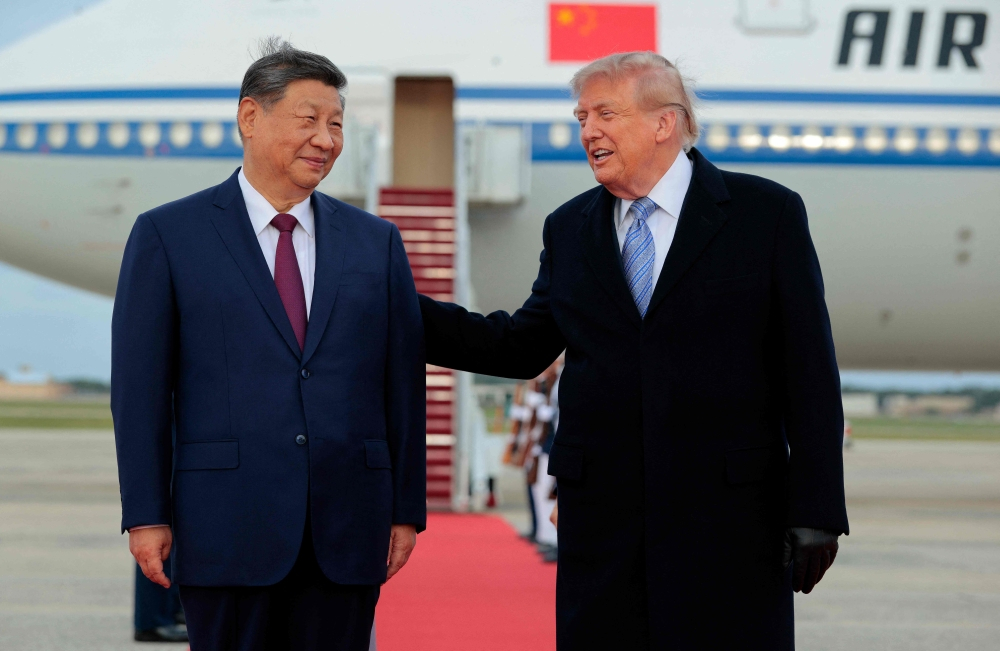
The arrival of Chinese President Xi Jinping in Washington has placed the relationship between the world’s two largest economies back in the global spotlight, with U.S. President Donald Trump giving his Chinese counterpart an unusually high-profile welcome at Joint Base Andrews.
Trump personally greeted Xi and his wife, Peng Liyuan, after their plane landed at the military base outside Washington. The reception included a red-carpet ceremony, handshakes between the two couples and a military band performing the national anthems of the United States and China. The gesture was notable because U.S. presidents do not typically meet visiting foreign leaders at the airport.
The highly choreographed welcome was only the opening scene of a three-day state visit that brings together two leaders navigating a relationship shaped by trade disputes, technological competition, security concerns and growing geopolitical tensions. The visit is expected to include formal talks at the White House, a military review and a state dinner attended by several prominent technology and business leaders.
Behind the ceremony, however, the discussions carry much greater consequences. Trade is expected to be one of the central issues, particularly the fragile tariff truce between Washington and Beijing. The two countries have spent years imposing and negotiating tariffs and restrictions affecting supply chains, businesses and consumers around the world. Reuters reported ahead of the summit that markets were watching closely for signs that the existing trade arrangement could be extended.
Rare-earth minerals are another important issue. China plays a dominant role in the global rare-earth supply chain, while the United States is seeking greater security for access to these strategically important materials. U.S. officials indicated that Washington could consider limited tariff adjustments on some nonstrategic goods, while broader changes involving rare-earth export controls remained more difficult.
Artificial intelligence is also moving from the technology sector into the center of international diplomacy. Washington and Beijing are competing for technological leadership while simultaneously confronting concerns over AI’s implications for national security, economic competitiveness and potential misuse. Discussions have included the possibility of creating a communication channel between the two countries to address AI-related risks and incidents.
The Iran war adds another complicated layer to the meeting. China maintains important economic relationships with Iran, particularly through energy trade, while Washington has been scrutinizing Beijing’s links with Tehran. Reuters reported that U.S. officials expected Iran-related issues to remain part of the broader conversation between Trump and Xi.
The visit has also attracted political criticism inside the United States. Some China hawks have questioned the scale of the welcome and raised concerns about giving Xi such prominent diplomatic treatment while tensions involving China, Iran and U.S. security interests remain unresolved. Those criticisms highlight the difficult balance surrounding the summit: Washington wants stability and economic engagement with Beijing while continuing to compete with China over technology, strategic resources and security.
The presence of major technology executives at the state dinner further underlines how closely business and geopolitics are now connected. Guests expected at the event include leaders and prominent figures from companies including Amazon, Google, OpenAI, Apple, Tesla, Nvidia and Dell Technologies. Their participation reflects the growing importance of artificial intelligence, advanced technology and global supply chains in the U.S.-China relationship.
For ordinary people, the summit may sound like another meeting between world leaders, but its consequences can reach far beyond the White House. Decisions involving tariffs can influence the prices of imported goods. Agreements involving rare-earth materials can affect electronics and manufacturing. AI discussions can shape the rules surrounding one of the world’s fastest-changing technologies, while decisions connected to Iran can influence energy markets and wider geopolitical tensions.
That is why the most important part of the Trump-Xi meeting may not be the red carpet, military bands or formal dinners. The real story will unfold in the negotiations behind closed doors and in what both governments actually agree to afterward. A carefully staged diplomatic welcome can create the atmosphere for dialogue, but lasting changes in the U.S.-China relationship will depend on whether the two sides can turn that atmosphere into concrete agreements.
For now, Washington and Beijing appear focused on preventing their rivalry from escalating while protecting their respective economic and strategic interests. The summit therefore carries two very different images at once: the public spectacle of two powerful leaders standing together beneath the flags of their nations, and the much harder private task of managing disagreements that could shape global trade, technology and security for years to come