Breast cancer treatment is undergoing a major shift — moving away from a one-size-fits-all approach toward deeply personalised care that focuses not just on the disease, but on the woman living with it.
In earlier years, treatment decisions were largely based on the stage of cancer. Patients diagnosed at the same stage were often given similar treatment plans, regardless of individual differences.
Today, advances in precision medicine and oncoplastic surgery are changing that approach completely. Doctors now design treatment plans based on the biological nature of each tumour, the patient’s overall health, and even quality-of-life considerations.
Consultant clinical oncologist Dr Christina Lai Nye Bin explains that modern breast cancer care is no longer defined only by how far the disease has spread.
Breast cancers are now classified into different biological subtypes. Doctors study tumour characteristics closely before recommending treatment, allowing for far more targeted and effective care.
By understanding the tumour’s biology, specialists can decide which treatments will work best for each individual patient, moving away from standardised protocols.
Many people still assume that advanced breast cancer automatically requires chemotherapy. However, treatment decisions today are much more nuanced and depend heavily on tumour biology.
When a patient is diagnosed, biopsy samples are analysed in detail. Doctors look at key biomarkers such as oestrogen receptor (ER), progesterone receptor (PR), human epidermal growth factor receptor 2 (HER2), and Ki-67, which indicates how quickly cancer cells are growing.
These markers help classify breast cancer into subtypes like hormone receptor-positive, HER2-positive, or triple-negative disease, each requiring a different treatment strategy.
For example, patients with hormone receptor-positive breast cancer may benefit from hormone therapy or targeted therapy instead of chemotherapy. This reduces unnecessary side effects and makes treatment more tolerable.
Doctors also take into account the patient’s personal health profile. Age, fitness level, and existing medical conditions all influence treatment decisions. A patient with severe heart disease or uncontrolled diabetes may not be suitable for certain aggressive therapies, while a healthy older patient may still tolerate intensive treatment well.
In addition to biomarker testing, genomic testing is also becoming increasingly important. This advanced analysis studies gene activity within cancer cells and helps predict how the disease will behave.
In some cases, tumour samples are sent to specialised laboratories in the United States for evaluation. The resulting risk score can help determine whether chemotherapy is truly necessary.
This means that even patients with stage two breast cancer and lymph node involvement may sometimes avoid chemotherapy if their cancer is assessed as low risk.
What was once an expensive and limited test is now becoming more widely available, including in Malaysia, with some insurance providers covering the cost.
Personalised care does not stop in the oncology clinic — it extends into the operating theatre as well.
Consultant oncoplastic breast and endocrine surgeon Dr Harjit Kaur explains that surgical decisions are also highly individualised. Factors such as tumour size, breast size, and the ratio between them play a major role in determining the best surgical approach.
The number and location of tumours are also crucial. A single tumour may allow for breast-conserving surgery, also known as a lumpectomy, while multiple tumours in different areas may require a mastectomy.
Tumour biology also influences surgical planning. Aggressive cancers may require additional treatments such as chemotherapy or radiotherapy, which can take priority over reconstruction.
Genetic risk is another important consideration. Women carrying inherited mutations linked to breast cancer may be advised to undergo preventive surgery, including removal of both breasts followed by reconstruction.
Lifestyle and health conditions such as diabetes and smoking also affect surgical outcomes, increasing the risk of infection and delayed healing.
Dr Harjit emphasises that all these factors are discussed with the patient before a shared decision is made, ensuring that care is both medically appropriate and personally acceptable.
For many women, preserving the breast remains a top priority whenever possible. In the past, the focus of surgery was simply to remove the cancer, with little attention given to appearance or emotional impact.
Today, the goal is more balanced — treating the cancer effectively while also preserving quality of life and self-image.
Oncoplastic surgery now plays a key role in achieving this balance. Instead of simply removing a tumour and leaving a gap, surgeons reshape and redistribute remaining breast tissue to maintain a natural appearance.
This approach helps prevent deformity, shrinkage, or asymmetry that can occur after healing.
When mastectomy is required, reconstruction options provide further support for recovery and emotional well-being.
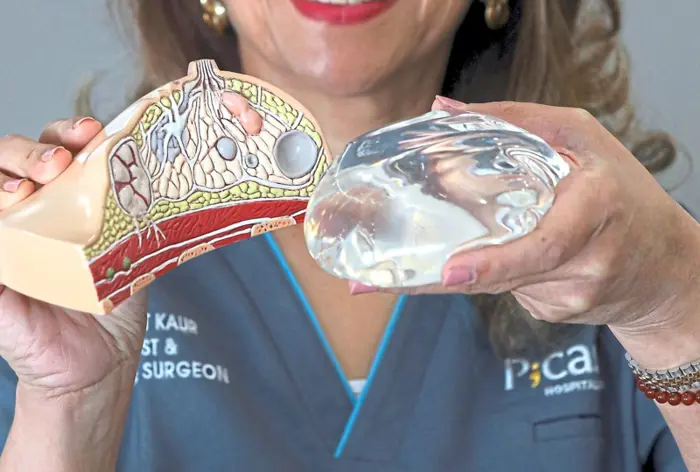
Implant-based reconstruction offers a simpler option that can often be performed during the same surgery as cancer removal. If needed, implants can later be removed or replaced.
Another option involves using the patient’s own tissue from areas such as the abdomen or back to recreate the breast. This autologous reconstruction is often preferred by patients who wish to avoid implants or are medically unsuitable for them.
In some cases, fat transfer techniques are used to refine shape and correct irregularities, although multiple sessions may be required.
Dr Harjit notes that attitudes toward breast reconstruction have changed significantly. What was once seen as purely cosmetic is now recognised as an essential part of comprehensive cancer care.
Women who undergo reconstruction often report improved confidence, emotional healing, and better overall quality of life — showing that breast cancer treatment today is about far more than survival alone. It is about helping women live fully beyond the diagnosis.