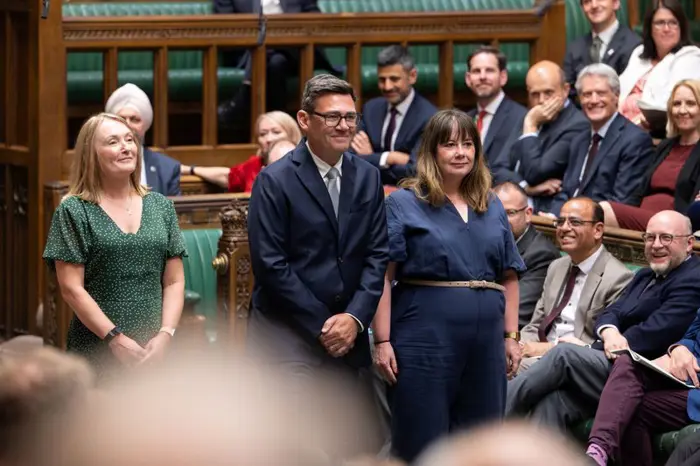
Andy Burnham, a senior Labour lawmaker widely seen as a potential successor to UK Prime Minister Keir Starmer, is preparing to set out a major political vision that could reshape how Britain is governed.
In a speech scheduled for Monday, Burnham is expected to call for a significant shift of authority away from London and toward regional and local governments. His proposal reflects a long-standing argument that decision-making in the UK is too centralized, leaving many communities underrepresented and underpowered.
Burnham, who recently returned to Westminster after winning a parliamentary seat, is currently viewed as the only declared contender in the race to replace Starmer, who announced last week that he plans to step down just two years after securing a large Labour majority.
Having built his reputation as the mayor of Greater Manchester and earned the nickname “King of the North,” Burnham is expected to make devolution the cornerstone of his political agenda. His vision focuses on giving regions greater control over housing, infrastructure, public services, and economic planning.
Alongside governance reform, he is expected to propose a 10-year national mission aimed at improving living standards through reindustrialisation, large-scale housing development, infrastructure expansion, and reform of public utilities. The emphasis, according to his office, is not only on who leads the country, but on fundamentally changing how it is governed.
His broader message is expected to centre on restoring economic confidence and “lifting Britain back up to where it should be,” while also introducing reforms to public procurement to strengthen domestic jobs and industry.
If he ultimately becomes prime minister, Burnham would become the seventh person to hold the office in just over a decade, reflecting a period of political instability in the UK. Supporters within his party argue that his leadership style and regional appeal could help reconnect Labour with voters and counter the growing influence of Nigel Farage’s Reform UK party.
However, any ambitious agenda will face real-world financial limits. The UK economy continues to feel pressure from global instability, including the ongoing effects of the war in Ukraine and energy market disruptions linked to international tensions.
Burnham has previously argued for loosening the UK’s reliance on financial markets, though he later clarified his remarks. He has also moved away from earlier suggestions of large-scale nationalisation or rapid re-entry into the European Union.
Housing Minister Steve Reed has stated that Burnham would remain committed to Labour’s pre-election promises and adhere to existing fiscal rules, including balancing day-to-day spending with revenues and reducing national debt relative to economic output.
Reed emphasised that stability would remain central to any future leadership approach, suggesting continuity in economic discipline even amid proposals for structural reform.
At its core, Burnham’s emerging message is about balance—between national control and regional voice, ambition and financial restraint, and long-term reform versus immediate economic reality. For many observers, his speech will be an early signal of whether Britain is entering a new political chapter or simply reshaping familiar debates in a different form.