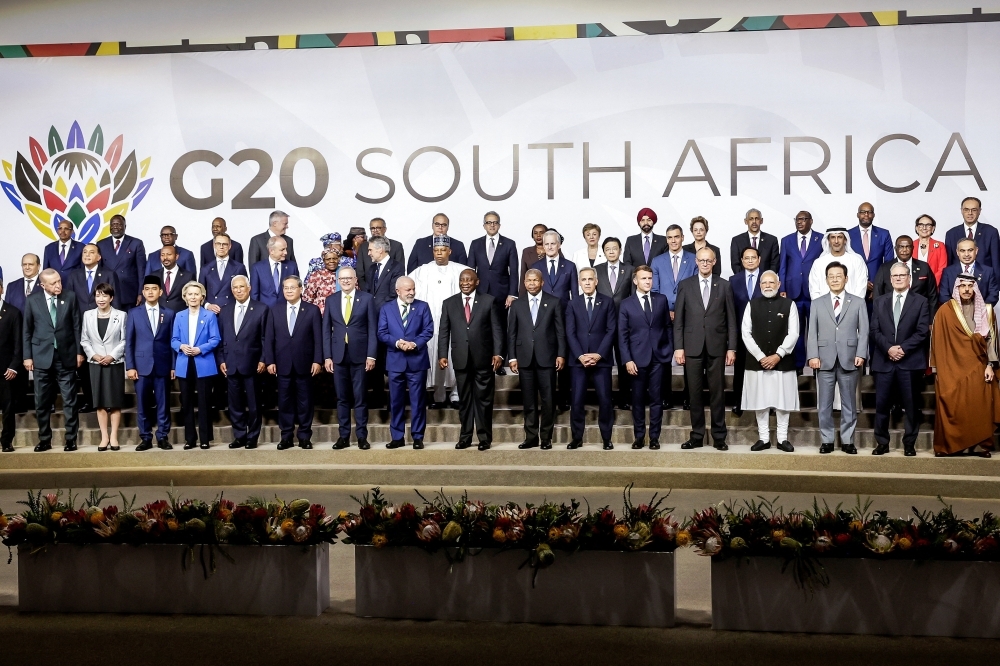
In a bold move at the Johannesburg summit this weekend, South Africa successfully guided the Group of 20 (G20) leaders to adopt a declaration addressing climate change, debt relief, and other pressing global issues, despite opposition from the United States. The decision reflects the growing influence of emerging economies in shaping the global agenda.
The declaration, drafted without US participation, emphasizes the urgency of tackling climate change, supporting renewable energy initiatives, and easing the debt burdens of developing nations. “We had the entire year of working towards this adoption and the past week has been quite intense,” said President Cyril Ramaphosa’s spokesperson, Vincent Magwenya, highlighting the meticulous effort behind the declaration.
The move prompted sharp criticism from the White House, which accused South Africa of using its G20 presidency to challenge the US and its policies. “They have weaponized their G20 presidency to undermine the G20’s founding principles,” said White House spokeswoman Anna Kelly, signaling friction between Pretoria and Washington.
Despite these tensions, Ramaphosa underscored the overwhelming consensus among G20 members. Argentina, led by far-right President Javier Milei, opted out of endorsing the final text, citing concerns over geopolitical phrasing, particularly on the Middle East conflict. However, Ramaphosa pressed ahead, maintaining that the summit’s outcomes reflect the collective vision of the participating nations.
The declaration’s inclusion of climate change was a pointed contrast to the Trump administration’s stance, which has historically questioned human-driven global warming. South Africa’s leadership highlighted the responsibility of major economies to act decisively in the face of climate crises, energy transitions, and debt challenges affecting poorer nations.
“This G20 is not about the US alone,” said South African Foreign Minister Ronald Lamola. “We are all equal members of the G20. The decisions taken here reflect where the world must go.”
The summit also unfolded against a backdrop of geopolitical tensions, including Russia’s war in Ukraine and global supply chain concerns. EU Commissioner Ursula von der Leyen warned of the risks posed by “weaponisation of dependencies,” a veiled reference to China’s export controls on rare earth elements crucial for clean energy and technology sectors.
Despite these challenges, South Africa’s presidency emphasized protocol and dignity in leadership, rejecting US proposals to pass the G20 presidency to a junior official. Instead, the handover will be conducted at an appropriate diplomatic level, preserving the integrity of the G20 process.
South Africa’s decisive approach this weekend showcases the country’s growing role on the world stage, not merely as a participant, but as a leader shaping a global agenda focused on fairness, sustainability, and solidarity.