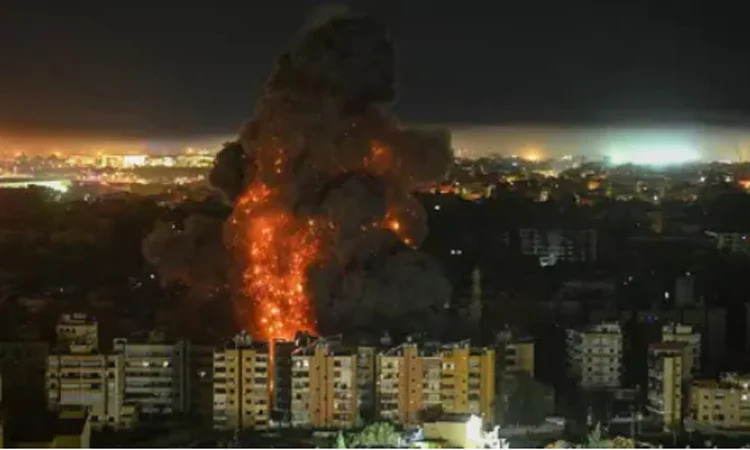
Iran has reportedly carried out a new wave of missile strikes targeting both Israeli and American positions across the Middle East, according to Iran’s state broadcaster IRIB. The strikes mark one of the most intense phases of the ongoing conflict, signaling a serious escalation in regional tensions.
State media reported that the attack lasted nearly three hours and was described as the most intense barrage since the war began. The operation was attributed to Iran’s elite Revolutionary Guards, who claimed responsibility for launching the missiles toward multiple strategic targets.
Israeli Cities Targeted During the Barrage
According to the broadcast report, several major Israeli cities were targeted during the attack. These reportedly included Tel Aviv, Haifa, and West Jerusalem, which refers to the part of Jerusalem under full Israeli administrative control.
In response, Israel’s military confirmed that it detected incoming missiles heading toward the country. Air defense systems were immediately activated in an attempt to intercept and neutralize the threats.
Witnesses and journalists in the region reported hearing air raid sirens across Jerusalem. Explosions were also heard in the distance, suggesting that some intercept attempts took place in the skies above the city.
US Military Positions Also Targeted
Iranian state media also claimed that the missile barrage extended beyond Israel. Reports indicated that several American targets in the Middle East were struck as well.
Among the locations mentioned were US military positions in Erbil, located in Iraq’s Kurdish region, along with the headquarters of the US Navy’s Fifth Fleet based in Bahrain. These facilities represent key American strategic points in the Gulf region.
Earlier statements carried by Iran’s Tasnim News Agency said that a mass launch of ballistic missiles had been directed at these locations, though independent confirmation of damage or casualties has not been fully verified.
Rising Tensions Since Initial Strikes
The broader conflict reportedly began after US and Israeli strikes on Iranian targets on February 28. Since then, the region has experienced repeated cycles of retaliation.
Iran has responded with waves of missile attacks, while Israel and its allies have continued to strengthen their defensive posture across the region. Military forces remain on high alert as tensions continue to rise.
In a separate statement, Iran’s Revolutionary Guards claimed that no US Navy vessel had approached the Strait of Hormuz following the recent developments. This statement came shortly after US Energy Secretary Chris Wright initially posted that the US Navy had escorted an oil tanker through the strait, before deleting the message minutes later.
Gulf Region Reports Additional Interceptions
Early Wednesday, several Gulf countries reported new aerial threats moving across the region. Saudi Arabia and the United Arab Emirates both announced that their defense systems had intercepted missiles and drones believed to be linked to the ongoing conflict.
These developments highlight how the confrontation is no longer limited to a single battlefield. Instead, the entire Middle East appears increasingly drawn into the crisis, raising concerns among global leaders about the risk of a broader regional war.
A Conflict With Global Consequences
The situation unfolding across the Middle East is being closely watched around the world. The region plays a crucial role in global energy supply, trade routes, and international security.
Military activity near critical locations such as the Strait of Hormuz raises concerns about potential disruptions to global oil markets and shipping lanes.
As diplomatic efforts struggle to keep pace with military developments, analysts warn that every new strike increases the risk of further escalation.
For millions of civilians living across the region, the reality is far more personal. Air raid sirens, missile interceptions, and uncertainty about what comes next have become part of daily life.
The world now waits to see whether diplomacy can regain ground, or whether the conflict will deepen further in the coming days.