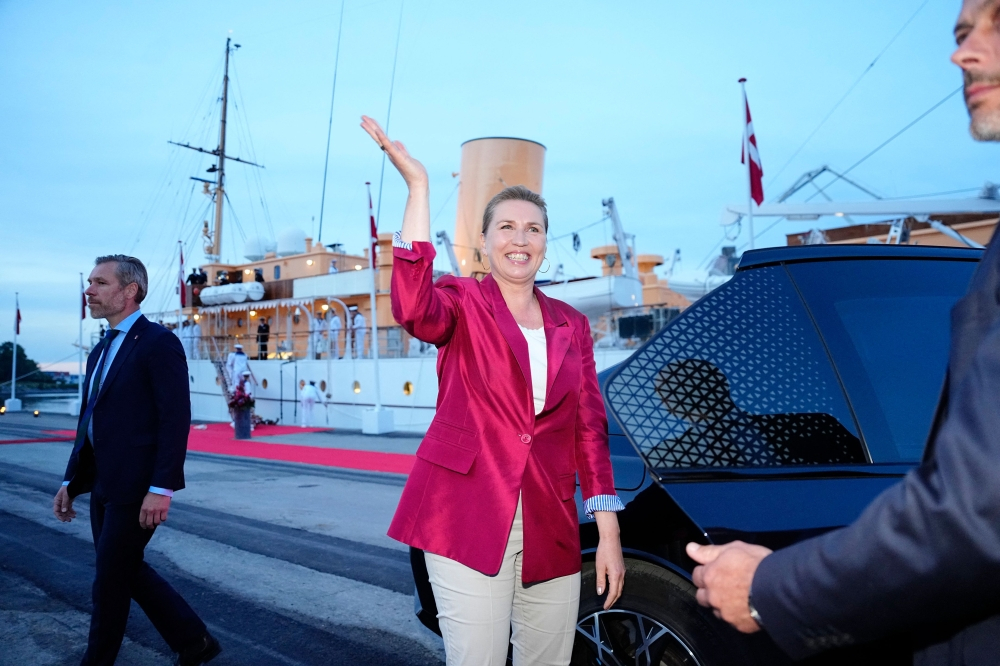
Denmark’s Prime Minister Mette Frederiksen has successfully secured a third term in office after reaching an agreement to form a new left-leaning minority coalition government, ending months of political negotiations that followed the country’s inconclusive general election in March.
Speaking to reporters after meeting King Frederik X, Frederiksen confirmed that a new government had finally been established after extensive discussions among multiple political parties.
The newly formed coalition brings together Frederiksen’s Social Democrats, the Socialist People’s Party, the centre-left Radikale Venstre, and the centrist Moderates. Together, these four parties will hold 82 seats in Denmark’s 179-seat parliament, creating a government that will rely on support from other political groups to advance its agenda.
The achievement marks another significant milestone for Frederiksen, who remains one of Europe’s most influential political leaders. At 48 years old, she has become known both for her domestic policies and her strong stance on international issues, including her firm opposition earlier this year to comments from US President Donald Trump regarding Greenland, the autonomous Danish territory.
Following the announcement, Frederiksen expressed confidence in the coalition’s ability to govern effectively despite the challenges ahead.
She emphasized that the new government’s agenda would focus on creating positive outcomes not only for current citizens but also for future generations. Environmental sustainability, social welfare, and economic stability are expected to feature prominently in the coalition’s policy framework.
The March 24 election left Denmark politically divided, with neither the traditional left-wing nor right-wing blocs able to secure a parliamentary majority. The fragmented result led to prolonged negotiations as political parties struggled to find common ground.
Initial attempts to establish a government failed despite multiple rounds of discussions. Frederiksen first led coalition talks herself, while later efforts headed by the liberal Venstre party also proved unsuccessful. Eventually, King Frederik X asked Frederiksen to make another attempt, a move that ultimately resulted in the coalition agreement announced this week.
One of the defining issues during the election campaign was Denmark’s industrial pork farming sector. While the industry remains a major contributor to the national economy, it has increasingly faced criticism over its environmental impact. The debate highlighted growing public concern about balancing economic growth with environmental responsibility.
Although Frederiksen’s Social Democrats recorded their weakest electoral performance since 1903, the party still emerged as the largest political force in Denmark, securing 38 parliamentary seats and maintaining its position at the center of government formation efforts.
Meanwhile, the election also demonstrated the continued presence of right-wing and anti-immigration politics in Denmark. The Danish People’s Party significantly improved its performance, more than tripling its previous result and capturing nine percent of the national vote. Combined, Denmark’s three main anti-immigration parties secured approximately 17 percent of votes, reflecting a level of support that has remained relatively stable over the past two decades.
As Denmark enters a new political chapter, attention now turns to the government’s upcoming policy agenda and cabinet appointments. Frederiksen is expected to unveil her administration’s full political program and introduce her ministerial team in the coming days.
For many Danes, the successful formation of a government brings much-needed political certainty after months of uncertainty. The coalition now faces the challenge of uniting diverse political perspectives while addressing economic, environmental, and social priorities in an increasingly complex global landscape.
The coming years will reveal whether this coalition can deliver the stability, progress, and reforms that voters are seeking. What remains clear is that Mette Frederiksen has once again demonstrated her ability to navigate Denmark’s challenging political environment and retain her position as the country’s leader.