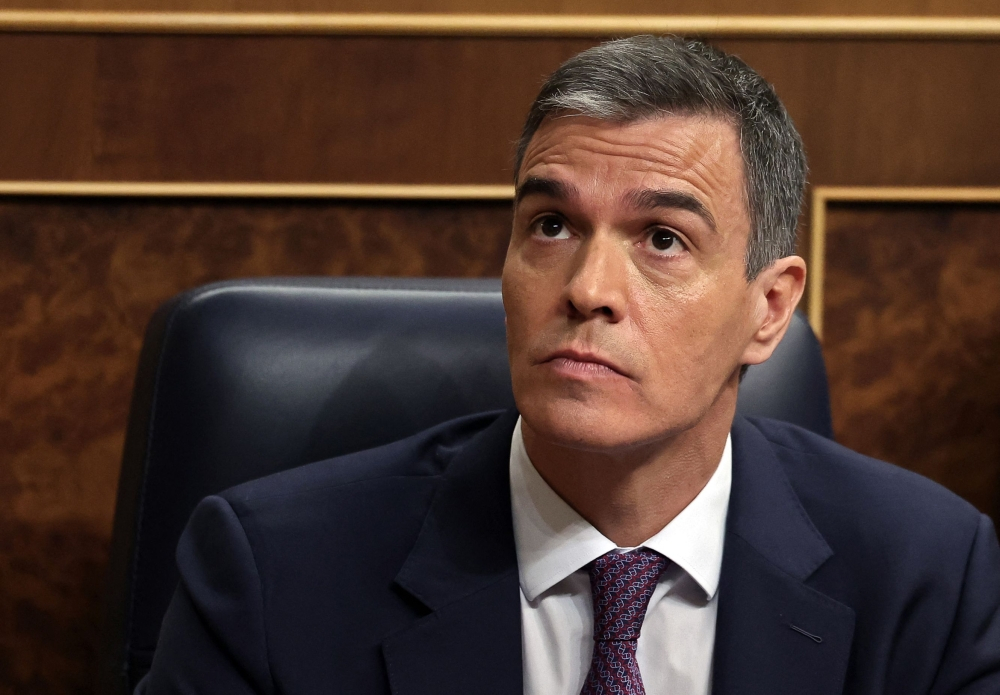
Spain is taking a strategic step toward strengthening its relationship with China, as Prime Minister Pedro Sánchez begins a three-day visit aimed at boosting trade and long-term cooperation with the world’s second-largest economy.
This marks Sánchez’s fourth trip to China in just four years—an indication of how seriously Spain views this partnership. At a time when tensions with the United States are becoming increasingly unpredictable, Spain appears to be positioning itself as a steady bridge between China and the European Union.
Recent developments with Washington have added urgency to this visit. Under President Donald Trump, shifting policies and trade pressures have left several European nations reassessing their global alliances. Spain, in particular, has felt the heat after declining the use of its military bases for US operations targeting Iran—an important trading partner of China. That decision sparked threats from Trump to reduce trade ties with Spain.
Against this backdrop, Sánchez’s visit is focused on practical outcomes. His government is looking to expand Spain’s presence in China’s massive market, especially for agricultural and industrial goods. At the same time, discussions are expected to explore joint ventures in emerging technologies—an area where both countries see strong potential.
The visit also highlights Spain’s ambition to attract more Chinese investment into its economy, currently the fourth largest in the eurozone. Access to critical raw materials and deeper industrial cooperation are high on the agenda, signaling a broader vision beyond short-term trade gains.
During the trip, Sánchez is scheduled to visit major innovation hubs, including the headquarters of Xiaomi and a leading technology exhibition at the Chinese Academy of Sciences. He will also meet with top Chinese leaders, including President Xi Jinping and Premier Li Qiang, where key agreements and future collaborations are expected to take shape.
Trade between the two nations, however, remains uneven. China exports significantly more to Spain than it imports. Last year alone, Spain recorded a trade deficit of over 42 billion euros with China. Still, there are signs of progress—Spanish exports to China grew by nearly 7 percent in 2025, reflecting stronger economic ties.
Previous agreements have already opened doors for Spanish products such as pork and cherries, and officials are optimistic that this visit will further expand access for Spanish goods.
Experts believe Spain holds a unique position in China’s global strategy. With a relatively stable and fast-growing economy, competitive energy costs, and a diplomatic approach seen as less confrontational, Spain is increasingly viewed as a trusted partner. Beyond Europe, it also offers a gateway to Latin America and North Africa—making it an attractive hub for Chinese investors looking to expand globally.
China has openly acknowledged Spain’s importance, describing it as a key partner within the European Union. The relationship has been steadily strengthening, highlighted by a rare state visit from Spain’s King Felipe VI and Queen Letizia last year—the first in nearly two decades.
Sánchez’s visit is not just about trade—it reflects a shifting global landscape where countries are carefully balancing relationships and securing their economic future.
At its core, this story is about adaptation. Spain is reading the global room, understanding where opportunities lie, and making bold moves to protect its economic interests. In a world where alliances are constantly evolving, those who act early and strategically are the ones who stay ahead. Spain is clearly choosing action over hesitation.