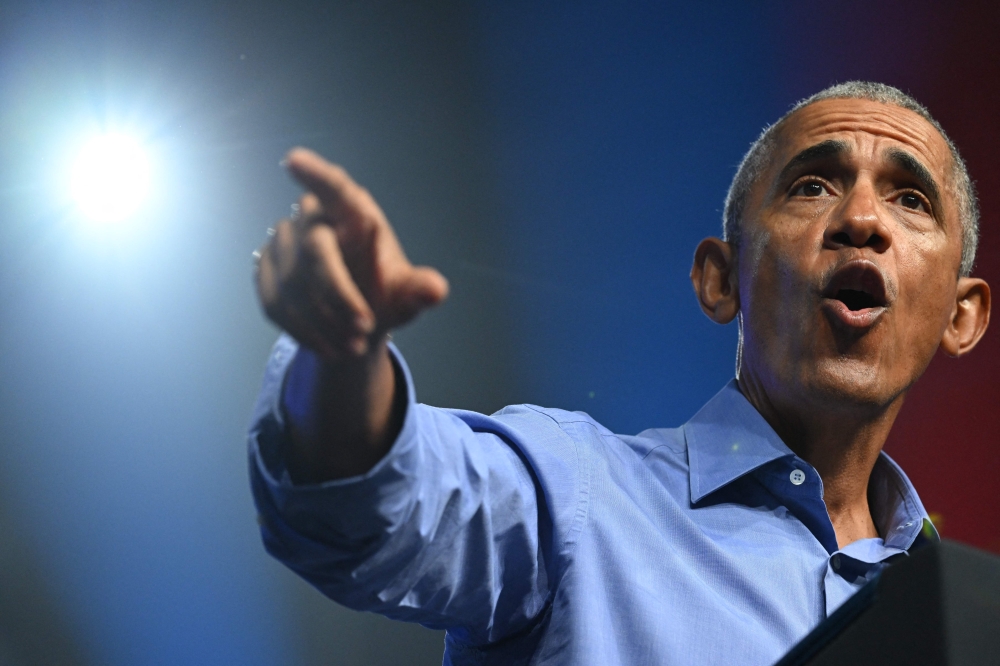
Former US President Barack Obama has issued a stark warning following former President Donald Trump’s decision to repeal a pivotal scientific determination that forms the backbone of federal climate regulations.
In a statement shared on X, Obama cautioned that dismantling the long-standing “endangerment finding” would have far-reaching consequences for public health, environmental safety, and the nation’s ability to confront climate change effectively.
What Is the Endangerment Finding?
The endangerment finding, established during the Obama administration under the Clean Air Act, concluded that greenhouse gases — including carbon dioxide and methane — pose a significant threat to public health and welfare by accelerating climate change.
This scientific determination became the legal foundation enabling the federal government to regulate emissions from vehicles, power plants, and industrial facilities.
Without it, many climate protections that limit pollution and reduce emissions could lose their legal grounding.
Obama’s Warning
Reacting to Trump’s repeal, Obama did not mince words. He warned that removing this scientific safeguard would leave Americans:
-
Less safe
-
Less healthy
-
Less equipped to combat climate change
“Without it, we’ll be less safe, less healthy and less able to fight climate change — all so the fossil fuel industry can make even more money,” Obama wrote.
His remarks reflect deep concerns among climate advocates who view the repeal as a significant rollback of environmental protections at a time when global temperatures continue to rise and extreme weather events intensify.
The Bigger Picture
The endangerment finding has long been considered a cornerstone of US climate policy. Environmental experts argue that undoing it could:
-
Undermine federal authority to regulate greenhouse gas emissions
-
Weaken air quality protections
-
Slow national progress toward reducing carbon pollution
-
Increase long-term health risks associated with climate change
Supporters of repeal, however, have framed the move as a step toward reducing regulatory burdens on industry and boosting economic growth.
What This Means for Americans
The debate is not just political — it is deeply personal. Climate change impacts communities through wildfires, hurricanes, floods, heatwaves, and worsening air quality. These are not abstract policy discussions; they affect families, children, farmers, workers, and vulnerable populations across the country.
Public health researchers consistently link rising temperatures and pollution levels to respiratory illnesses, heat-related deaths, and worsening chronic health conditions.
A Human Reality Beyond Politics
At its heart, this issue reaches far beyond Washington. It is about the air families breathe, the safety of coastal homes, the stability of food supplies, and the health of future generations.
For many Americans, climate policy is no longer a distant debate — it is visible in scorching summers, unpredictable storms, and rising healthcare concerns. Regardless of political affiliation, communities across the nation are already feeling the pressure of a changing climate.
As the conversation continues, what remains clear is this: decisions made at the highest levels of government will shape the safety, health, and economic resilience of millions of ordinary people.