Japan and the Philippines have taken another significant step in strengthening their defence relationship, signing two key military agreements aimed at deepening cooperation and improving regional security. The move comes at a time of rising geopolitical tension in East Asia, particularly in waters where maritime disputes continue to create unease.
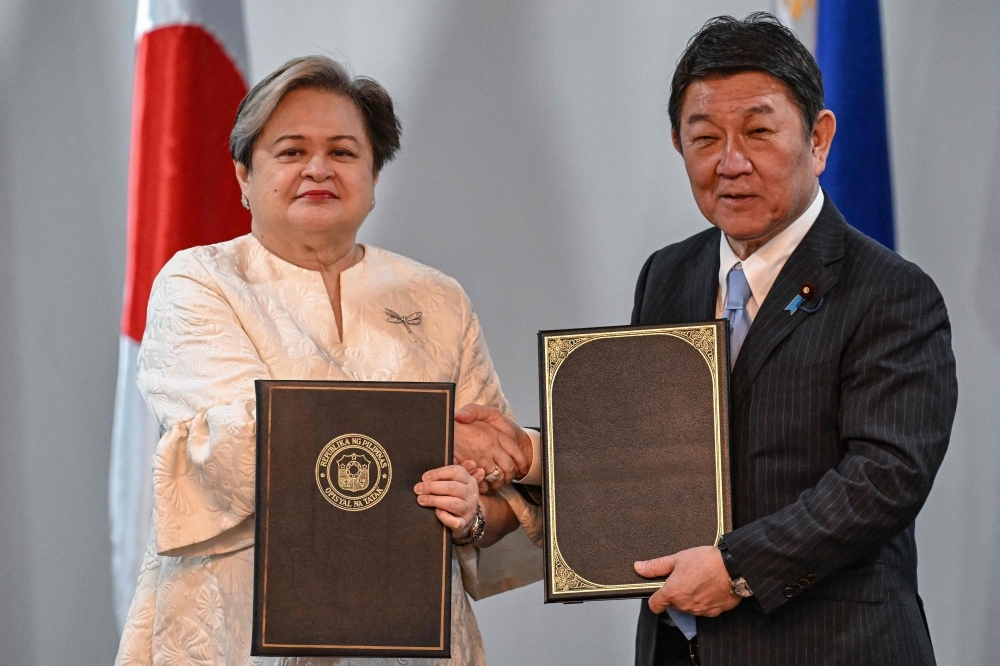
One of the agreements, known as the Acquisition and Cross-Servicing Agreement, allows the armed forces of both countries to exchange supplies and services more smoothly during joint activities and operations. This deal builds on the Reciprocal Access Agreement that recently came into force, further aligning two of the United States’ closest partners in Asia.
The agreements were signed in Manila by Japanese Foreign Minister Toshimitsu Motegi during his official visit, highlighting Japan’s expanding diplomatic and strategic engagement across Asia and beyond. During the visit, Japan also announced six million US dollars in Official Security Assistance to the Philippines. The funding will be used to construct facilities for rigid-hulled inflatable boats previously provided by Japan, helping strengthen the Philippines’ maritime defence capabilities.
Japan has repeatedly expressed concern over increasing tensions in regional waters and has stressed the importance of maintaining peace, stability, and respect for international law. Tokyo continues to oppose any unilateral actions that seek to alter the status quo and has reaffirmed its support for Philippine maritime security within a broader trilateral framework involving the United States.
Both sides underlined the importance of cooperation based on shared values, including freedom of navigation and adherence to the rule of law. The Philippines described Japan as a crucial strategic partner, especially as the country takes on a more prominent regional role through its leadership in ASEAN.
The agreement comes against the backdrop of heightened tensions in the Taiwan Strait. Japan has warned that stability in the area is essential not only for regional peace but also for global security. China, which claims sovereignty over Taiwan, has strongly opposed such statements, while Taiwan maintains that its future should be decided solely by its people.
Japan’s recent actions reflect a broader shift in its defence posture, as it undertakes a historic military build-up to respond to growing security challenges in the region.
At its core, this partnership is not just about military logistics or funding. It represents a shared commitment by Japan and the Philippines to work together for stability, cooperation, and peace in an increasingly uncertain regional environment.