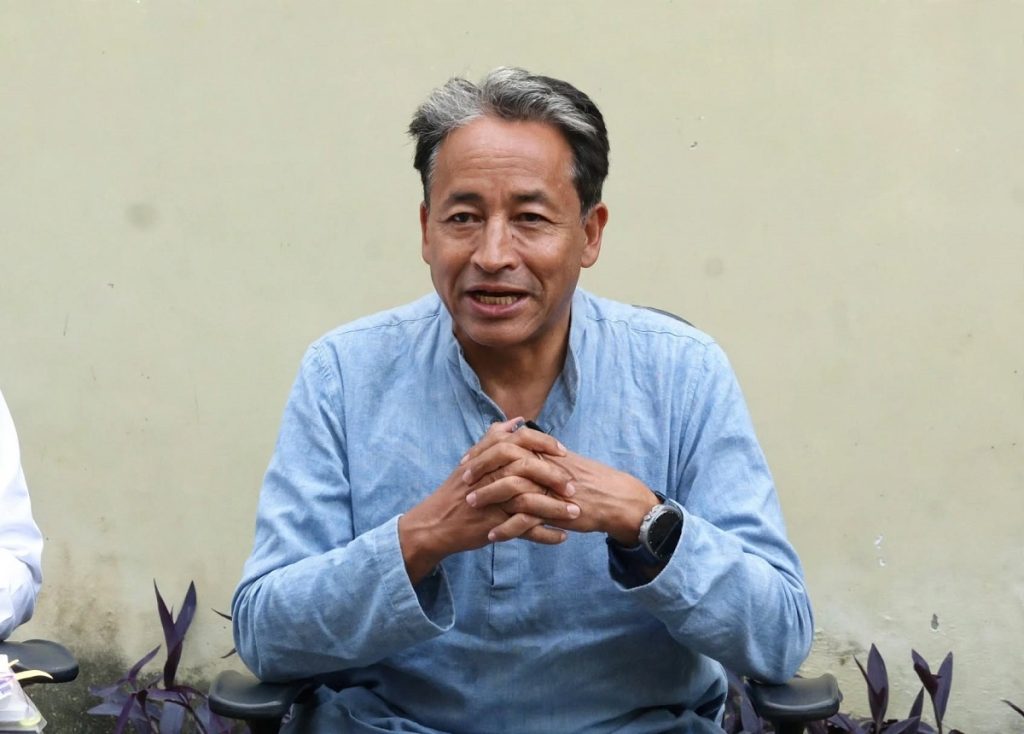
Climate activist Sonam Wangchuk has alleged that he has been placed under house arrest in Ladakh, claiming that around 25 police and paramilitary personnel have been deployed outside his residence. The development comes amid restrictions on a planned peaceful protest over several demands concerning the future, governance and political rights of Ladakh.
Wangchuk, a prominent member of the Leh Apex Body (LAB), has questioned the authorities’ decision to restrict his movement without formally arresting him. He stated that he intends to challenge the restrictions through the appropriate legal channels, including the magistrate, High Court and Supreme Court.
In a video message shared on his social media accounts, including X and Facebook, late Thursday, Wangchuk said security personnel, multiple vehicles and tents had been stationed outside his residence since Wednesday night. He further alleged that armed personnel had been positioned around different sides of his house, making it difficult for him to move freely.
Questioning the authorities’ reported explanation that he had only been advised to remain at home, Wangchuk argued that the presence of a significant security deployment effectively amounted to house arrest. He raised concerns about how someone could be prevented from attending a peaceful public demonstration without being formally taken into custody.
The restrictions reportedly came as Wangchuk and other activists, including representatives of the Leh Apex Body (LAB) and Kargil Democratic Alliance (KDA), were preparing for a sit-in protest over several long-standing demands concerning Ladakh.
One of the key issues involves the timing of the upcoming Autonomous Hill Development Council elections, scheduled for December 4. Wangchuk has criticised the decision to hold the elections during winter, arguing that a considerable section of Ladakh’s population may be away from the region during that period, potentially affecting public participation.
He has also expressed concerns over the functioning of the Hill Councils, alleging that these institutions have been weakened and deprived of meaningful administrative powers. According to him, stronger local governance and greater decision-making authority are essential to protecting the interests and aspirations of Ladakh’s people.
Another major demand highlighted by the activist is the release of the Commission of Inquiry report into the September 24 incident last year. Wangchuk alleged that the matter has not received the transparency it deserves and called for the findings to be made public.
Despite the restrictions, Wangchuk maintained that demonstrations have already taken place across different parts of Ladakh and that the movement would continue until the demands are addressed. He also appealed to people across India to support the region’s concerns and stand in solidarity with its residents.
In his message, he highlighted Ladakh’s contribution to the country, particularly the people who have stood alongside India’s younger generation and the soldiers protecting the nation’s borders. He urged citizens to recognise the concerns of Ladakh’s people and support their call for a meaningful resolution.
Meanwhile, Ladakh Police defended the preventive measures, stating that the action against Wangchuk was taken in compliance with prohibitory orders issued by the Chief Electoral Officer of the Union Territory of Ladakh and the District Magistrate, Leh. These orders regulate public rallies, protests and other gatherings within Leh Municipality during the ongoing election process.
The larger question goes beyond one individual or one protest. It is about how democratic societies balance public order with the right to peaceful expression. For the people of Ladakh, these demands represent concerns about representation, local governance, transparency and having a meaningful voice in decisions that affect their future. Whatever the outcome, peaceful dialogue, accountability and respect for democratic rights remain essential to building public trust.