
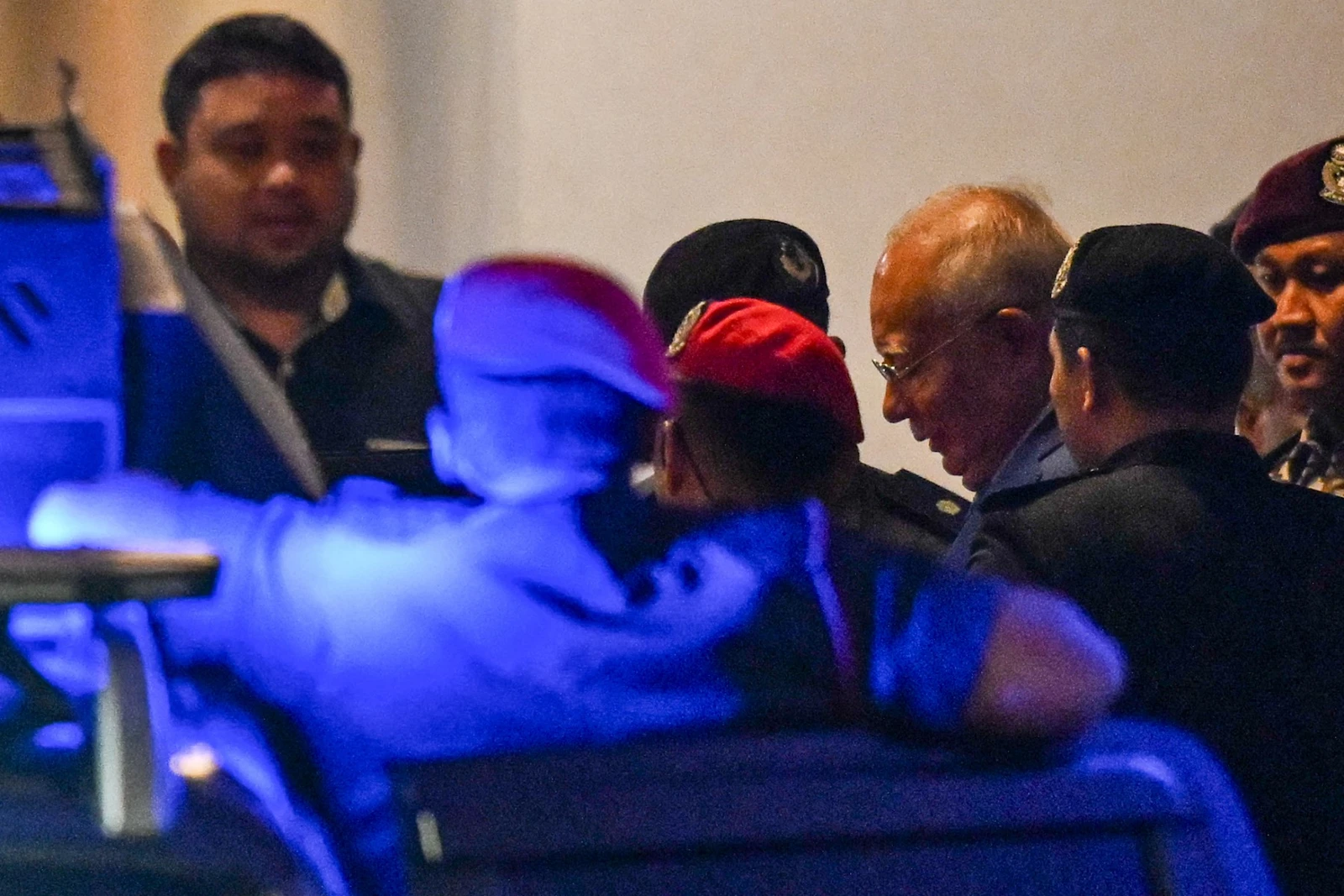
Malaysia’s former Prime Minister Najib Razak is moving closer to serving the remainder of his prison sentence under house arrest after his political party, the United Malays National Organisation (UMNO), confirmed that it had completed payment of a RM50 million fine required under the terms of his royal pardon.
The payment, announced on Friday, marks a significant development in the legal proceedings involving Najib, who served as Malaysia’s prime minister from 2009 to 2018. He was convicted in connection with the massive 1Malaysia Development Berhad (1MDB) financial scandal, one of the country’s most closely watched corruption cases.
According to UMNO, the payment was made to the Kuala Lumpur High Court following a fundraising effort organised by the party. The fine was one of the conditions attached to the royal pardon granted to Najib, which reportedly allows him to complete the remainder of his sentence under house arrest.
In September, Malaysia’s King agreed to a second royal pardon arrangement that would permit the former prime minister to serve the remaining period of his sentence at his residence rather than in prison. However, the exact date of his transfer to house arrest had not been confirmed at the time of the announcement.
Najib, who co-founded the 1MDB state investment fund during his time in office, was found guilty in a corruption case linked to the misuse of funds from the institution. He has consistently denied wrongdoing, maintaining that he was unfairly made the scapegoat for a complicated international financial scheme.
The 1MDB scandal attracted worldwide attention after investigators uncovered allegations that billions of dollars had been diverted from the state investment fund. According to US investigators, approximately $4.5 billion was allegedly misappropriated through an international network of transactions. More than $1 billion was reported to have reached accounts linked to Najib.
The former prime minister has argued that he was not responsible for the wider financial operation and has repeatedly challenged the allegations against him.
UMNO’s latest announcement adds another important chapter to a case that has continued to shape Malaysia’s political and legal landscape. The controversy surrounding 1MDB has remained a major subject of public discussion, raising broader questions about accountability, political leadership, transparency and the management of public funds.
For many Malaysians, the development is about more than the future of one former political leader. It also brings renewed attention to the importance of public trust, the responsibility of those holding positions of power and the role of institutions in ensuring accountability.
As the country awaits confirmation of Najib’s transfer arrangements, the case continues to hold national significance, with its consequences extending beyond the courtroom and into Malaysia’s wider political history.


