
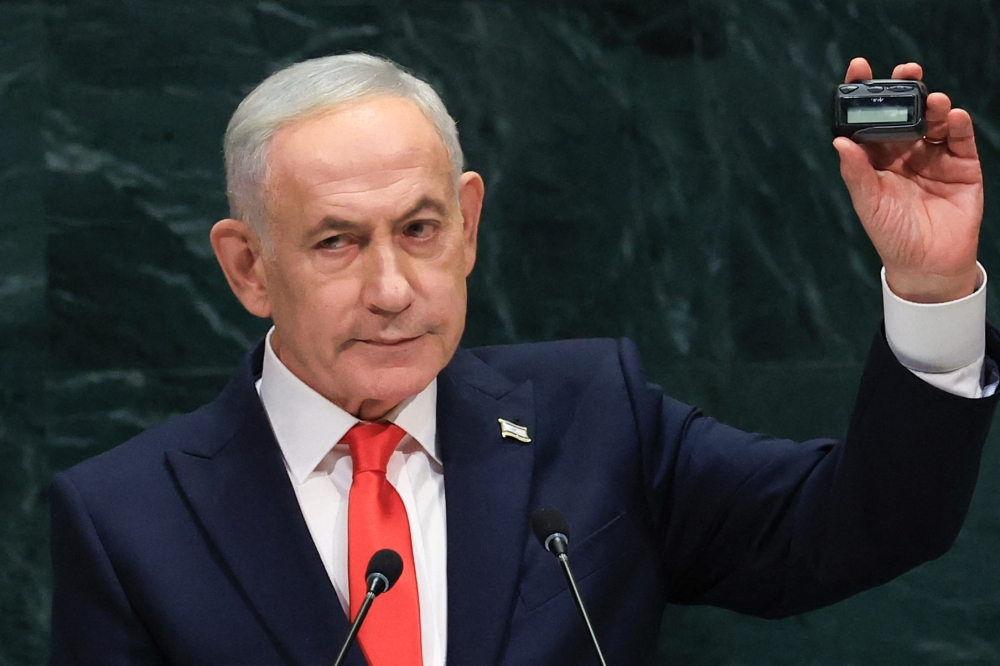
Israel’s Central Elections Committee has rejected allegations of electoral fraud raised by Prime Minister Benjamin Netanyahu, stating that its review found no evidence of manipulation and that the announced results accurately represent the choices made by voters.
The announcement comes at a politically sensitive moment, as Israel faces uncertainty over who will lead its next government following the October 27 election. Neither Netanyahu nor his main rival, Gadi Eisenkot, has secured the parliamentary majority needed to form a government independently.
President Isaac Herzog is expected to formally receive the election results and begin consultations with political parties to determine who should receive the first opportunity to form the next government.
Election authorities report no evidence of fraud
The Central Elections Committee revealed that it had reviewed 9,069 polling stations following complaints submitted by political parties. After completing the checks, the committee said it found no evidence suggesting that the integrity of the election had been compromised.
It maintained that the official results accurately reflected the will of Israeli voters, directly challenging allegations that had been repeatedly promoted by Netanyahu.
The prime minister had questioned the conduct of Arab-majority political parties, referring to incidents involving individuals reportedly arrested with envelopes of cash on election day. He also raised allegations involving lawmakers and financial support from Qatar, claims that have previously drawn scrutiny toward individuals within his own political circle.
Israel’s Attorney General, Gali Baharav-Miara, meanwhile, said that individuals would not be questioned without supporting evidence. Her position followed reports that the head of the Shin Bet domestic security service had sought to question members of Arab political parties.
Netanyahu’s Likud party strongly criticised the attorney general, accusing her of obstructing an investigation into what it described as possible foreign interference in the electoral process.
Gadi Eisenkot responded by accusing Likud of undermining democratic principles and attempting to weaken public confidence in the election.
Political divisions complicate government formation
The election has left Israel facing another difficult political calculation. Netanyahu’s bloc holds 53 seats, while Eisenkot’s opposition bloc has secured 48 seats in the 120-member parliament.
A government requires at least 61 seats to command a parliamentary majority.
This makes Arab-majority political parties particularly important. Their representation has increased to 19 seats, giving them significant potential influence over the next government’s formation.
Eisenkot could potentially reach the required majority by securing their support. However, some opposition figures remain reluctant to depend on Arab lawmakers to establish a governing coalition.
The situation highlights the political divisions within Israel, where disagreements over leadership, security policies, minority representation and the country’s direction continue to shape the political landscape.
Netanyahu faces growing pressure over unity government
Netanyahu, Israel’s longest-serving prime minister, has called for a broad national unity government with himself leading the administration.
However, opposition leaders have questioned whether such an arrangement is realistic.
Former prime minister Yair Lapid pointed to the political developments in the United States, where Democrats achieved significant victories against candidates aligned with President Donald Trump in the midterm elections.
Lapid argued that the developments surrounding the Shin Bet and the American election results had effectively eliminated the possibility of a unity government under Netanyahu’s leadership.
Eisenkot has also warned against escalating tensions with Iran, particularly through a potential military confrontation involving the United States. He suggested that Netanyahu could use a new conflict to strengthen his political position or delay the process of forming a government.
The possibility of renewed military escalation adds another layer of uncertainty to an already complicated political situation.
President Herzog begins consultations
President Isaac Herzog now faces an important constitutional responsibility.
Although the Israeli presidency is largely ceremonial, the president plays a decisive role in determining which political leader receives the first opportunity to form a government.
Following the official presentation of the election results, Herzog is expected to begin consultations with political parties over the next two days.
He has expressed a desire to encourage fresh political thinking, promote stability and avoid sending the country into another election.
The leader selected by Herzog will initially have 28 days to form a government, with a possible 14-day extension.
If that attempt fails, Herzog can assign the responsibility to another candidate. Should that process also prove unsuccessful, lawmakers may have 21 days to nominate an alternative candidate with majority support. Otherwise, the country could face another general election.
Israel has experienced repeated political deadlocks in recent years, including five elections between 2019 and 2022. Netanyahu himself required 58 days to form a government following the November 2022 election.
Arab political representation becomes increasingly important
The growing parliamentary presence of Arab-majority parties has become one of the most significant developments following the election.
Yousef Jabareen, head of the largest Arab-majority party in the incoming parliament, has urged opposition leaders to recognise the political reality and work together if they want to replace Netanyahu.
Netanyahu has repeatedly warned Jewish Israeli voters against an opposition government supported by Arab parties, accusing those parties of being sympathetic to Hamas.
Arab-Israeli political leaders have unanimously condemned Hamas’s October 7, 2023 attack, although they have not adopted the same terminology used by some Israeli political leaders when describing the organisation.
Their parliamentary influence could now become central to determining Israel’s political future.
A defining moment for Israeli democracy
The election watchdog’s rejection of fraud allegations represents an important development in an already tense political environment. Its findings reinforce the importance of independent electoral oversight, transparent investigations and public confidence in democratic institutions.
For Israel, the challenge now extends beyond selecting its next prime minister. The country must navigate deep political disagreements, questions about minority representation, security concerns and the growing demand for stable leadership.
The coming weeks will reveal whether political leaders can find common ground or whether Israel will once again move towards another election.
Ultimately, an election is not simply a contest between political leaders. It is a process through which citizens express their choices. Respecting verified results, allowing evidence-based investigations and protecting democratic institutions are essential responsibilities for every political party, regardless of who wins power.


