
Democrats and Republicans have entered the final stretch of an intensely contested midterm election campaign, with both sides making their last appeals to voters ahead of Election Day. The results could significantly reshape the balance of power in Congress and determine how much political influence President Donald Trump will retain during the remainder of his presidency.
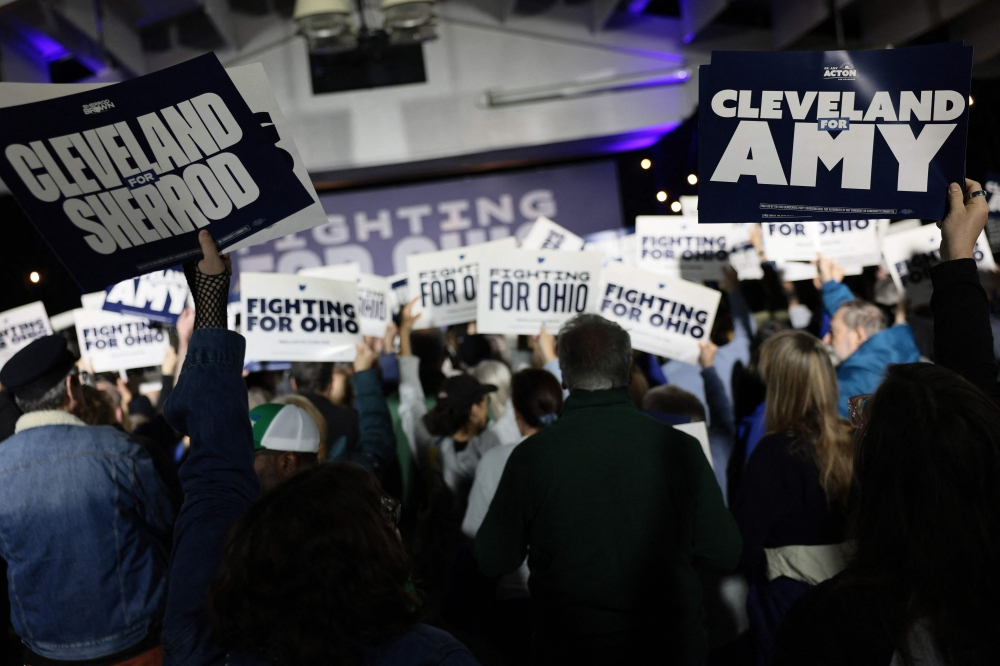
Democratic candidates organised a series of final get-out-the-vote rallies across the country, hoping to secure enough support to regain control of at least one chamber of Congress. Their main objective is to establish stronger political oversight of the Trump administration and introduce greater resistance to its legislative agenda.
Among the prominent Democratic figures participating in the final campaign events were Senate candidates James Talarico in Texas and Adam Hamilton in Kansas. Their rallies marked the conclusion of a campaign characterised by intense political disagreements, internal party divisions and increasingly aggressive exchanges between candidates.
President Trump, meanwhile, chose Washington’s Lincoln Memorial Reflecting Pool as the location for his closing campaign speech. The historic landmark has become associated with his controversial efforts to reshape and redevelop parts of the US capital.
Addressing supporters, Trump expressed confidence in his party’s chances, declaring, “We’re going to win.”
However, several opinion polls suggested that Democrats were gaining momentum, with a strong possibility of taking control of the House of Representatives. The Senate contest also appeared increasingly competitive, creating uncertainty about whether Republicans could maintain their control of both chambers.
A Democratic victory in the House would have significant consequences for Trump’s administration. Democrats would gain greater influence over federal spending decisions and control of powerful congressional committees. This could open the door to investigations into alleged government misconduct, the Epstein files and other politically sensitive matters.
Losing unified Republican control of Congress would also place Trump in a more challenging political position. His administration could face increased scrutiny as it deals with domestic economic pressures, rising living costs and the ongoing conflict with Iran.
Despite the encouraging polling numbers, Democratic leaders remain cautious. The party has experienced unexpected political setbacks before, making some candidates reluctant to celebrate prematurely.
Democratic Senator Raphael Warnock described the mood within the party as “nauseously optimistic” during an interview with CNN, reflecting both the excitement and uncertainty surrounding the election.
Internal divisions create challenges for Democrats
Although Democrats have focused on presenting a united front against Trump, disagreements within the party have exposed significant divisions between progressive candidates and the traditional establishment.
One of the most surprising developments occurred in Michigan, where Democratic Congresswoman Haley Stevens endorsed Republican candidate Mike Rogers in the state’s closely watched Senate race. Her decision came after she lost the Democratic primary to progressive candidate Abdul El-Sayed in August.
The endorsement created controversy within Democratic circles, particularly because Stevens had previously received backing from the party establishment.
Trump quickly praised Stevens for her decision, describing it as an act of bravery in a post on his Truth Social platform.
Stevens struggled to explain the reasoning behind her endorsement during a CNN interview, offering a brief explanation about her position following the primary contest.
Meanwhile, Republicans have continued their aggressive campaign against Democratic candidates, portraying the opposition as politically extreme. The attacks have also included controversial personal accusations against El-Sayed, who is Muslim.
Speaking at a campaign event in Iowa, Trump accused Democrats of being “extreme and dangerous radicals” and claimed their policies would threaten Americans’ financial security and public safety.
However, public opinion surveys suggest that Trump’s political approach is facing growing resistance among voters.
An NBC News poll released shortly before Election Day found that 60 percent of respondents disapproved of his performance as president. Economic concerns, particularly the rising cost of living and the impact of the ongoing conflict with Iran, were among the major factors influencing public dissatisfaction.
Senate race remains unpredictable
While Democrats appear to have a stronger chance of winning the House, the Senate remains a much more uncertain contest.
Only approximately one-third of the Senate’s 100 seats are being contested in the midterm elections. Several of the races were initially considered difficult opportunities for Democrats, particularly in traditionally Republican states.
However, stronger-than-expected performances by Democratic candidates have made the outcome increasingly difficult to predict.
A final New York Times/Siena poll released on Sunday showed Democratic candidates leading in all seven of the most competitive Senate races, although five of those contests remained within the margin of error.
Winning control of the Senate would give Democrats considerable influence over the federal judicial system. They could block or delay Trump’s lifetime judicial appointments, including potential appointments to the Supreme Court.
The possibility of a divided Congress has therefore become one of the central issues surrounding the election, with both parties recognising that even a narrow victory could have long-term political consequences.
Record early voting and billions spent on campaigns
The election has also attracted extraordinary public participation and financial investment.
Although Election Day is still ahead, approximately 54 million Americans had already cast their ballots through early voting, highlighting the enormous public interest in the outcome.
Campaign spending has also reached remarkable levels, with approximately US$11 billion spent on political advertising. A significant portion of the funding has come from wealthy individual donors and major political supporters.
Among the most prominent contributors is billionaire Elon Musk, a close Trump ally who previously led the Department of Government Efficiency (DOGE), an initiative associated with major efforts to reduce federal government departments and spending.
Musk has contributed nearly half a billion dollars towards efforts to support Republican candidates, making him one of the most financially influential figures in the election campaign.
The final verdict rests with American voters
Beyond the rallies, campaign advertisements and political arguments, the election represents a crucial test of public confidence in America’s political leadership.
For Democrats, the opportunity is to regain congressional influence and strengthen oversight of the Trump administration. For Republicans, the priority is to protect their existing majority and demonstrate that voters continue to support the president’s direction for the country.
The outcome will extend far beyond individual candidates or political parties. It could influence economic decisions, government investigations, immigration policies, judicial appointments and America’s political direction for years to come.
Ultimately, voters will decide whether the next chapter of American politics brings stronger opposition to the White House or gives Trump and his Republican allies continued control of Congress.
Source: Agence France-Presse (AFP).


