
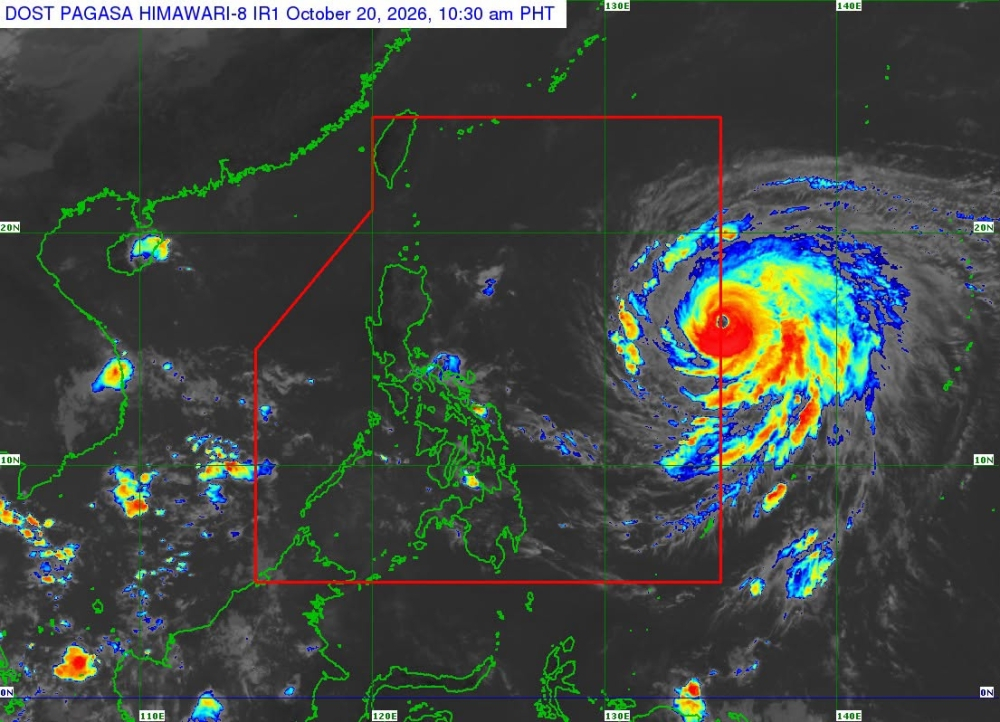
The world’s most powerful storm of 2026 is moving towards Taiwan and the eastern coast of China, raising concerns over destructive winds, heavy rainfall, flooding and widespread travel disruptions. Super Typhoon Champi, with maximum reported winds reaching 245 kilometres per hour, has triggered precautionary measures across several coastal regions as authorities prepare for potentially dangerous weather conditions.
Champi was moving northwest at approximately 20 kilometres per hour, according to China’s National Meteorological Centre. The storm’s changing direction has made it difficult to determine exactly where it could make landfall, leaving authorities and residents preparing for several possible scenarios.
In Zhejiang province, officials have begun preparations to evacuate vulnerable residents, including older people, pregnant women and people with disabilities. Authorities have also suspended 36 passenger ferry routes and halted work on 223 marine construction projects, according to the South China Morning Post. Coastal tourist attractions are being closed, while workers at offshore construction sites and fish farms have been instructed to move to safer locations.
Neighbouring Fujian province has also introduced precautionary measures. Fishing vessels have been ordered to return to port, with crews required to reach shore ahead of the storm’s possible impact. These measures are intended to protect lives and reduce the risks associated with powerful winds and dangerous sea conditions.
Earlier forecasts suggested that Champi could approach Taiwan’s eastern coast around Saturday before crossing the island and making a second landfall in Fujian province. However, updated projections indicate that the storm could instead turn northeast near Taiwan, potentially passing close to the island’s northeastern coastline before moving towards waters southwest of Japan.
Although the storm’s final trajectory remains uncertain, the threat extends beyond the possibility of a direct landfall. Zhejiang, Fujian and Shanghai could experience intense rainfall and strong winds as Champi moves through the region. Even a storm that remains offshore can generate hazardous coastal conditions, disrupt transport networks and bring substantial rainfall to densely populated areas.
Air travel is another concern. According to aviation data platform VariFlight, airports serving Shanghai, Hangzhou, Ningbo, Fuzhou, Wenzhou and Xiamen could face weather-related disruption. No widespread flight cancellations or delays had been announced at the time of the report, but passengers were advised to check directly with their airlines for the latest updates before travelling.
Authorities in Zhejiang have activated a typhoon emergency response and are preparing to suspend schools, businesses, workplaces, outdoor events and public transport if conditions worsen. Emergency teams are also inspecting drainage systems and vulnerable infrastructure to reduce the likelihood of flooding and landslides caused by prolonged rainfall.
China’s national weather agency has maintained a blue typhoon warning, the lowest level in its four-tier warning system. Residents have been urged to secure outdoor structures, avoid unnecessary journeys and stay away from mountainous areas, river valleys and other locations where flash flooding or landslides could occur.
The situation highlights the challenges of preparing for powerful tropical cyclones when their paths can change quickly. Forecasts provide important guidance, but shifting weather conditions mean that communities must remain alert even when the storm’s exact destination is unclear.
For people living in potentially affected areas, following official weather updates, preparing essential supplies and complying with evacuation instructions can make a critical difference. Travellers should monitor airline announcements, while coastal residents should avoid dangerous waters and follow local emergency guidance.
As Champi continues to move across the western Pacific, the priority remains protecting lives, limiting damage and ensuring communities are ready for rapidly changing conditions. Whether the storm approaches Taiwan directly or turns towards Japan, its wide circulation could still bring serious weather risks to parts of East Asia. Staying informed and taking precautions early are among the most important steps residents can take while authorities continue to assess the threat.


