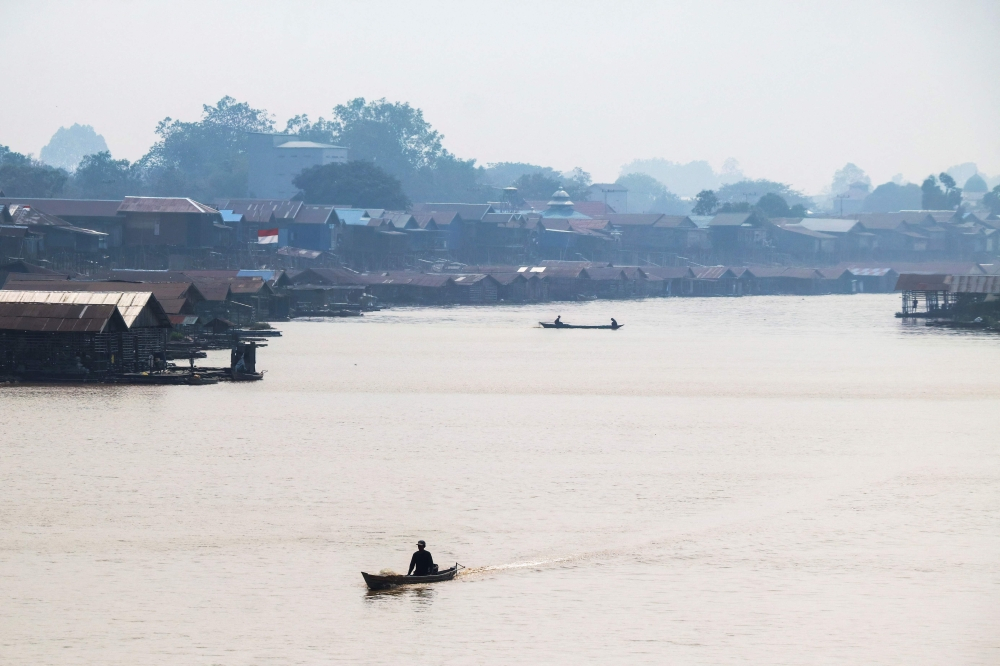
Thick haze is once again casting a dangerous shadow over parts of Indonesia, with millions of people facing increased respiratory risks as widespread wildfires continue to burn across Sumatra and Borneo.
Indonesia has been battling fires for weeks, with smoke blanketing cities and towns, disrupting daily life, closing schools and sending thousands of people for medical treatment. The haze has also crossed national borders, affecting neighbouring Malaysia and Singapore.
According to Indonesia’s health ministry, around 3.4 million people across seven provinces in Sumatra and Borneo are considered at risk of respiratory infections because of prolonged exposure to polluted air.
In Pekanbaru, the capital of Riau province, heavy smog has become so intense that authorities have closed dozens of schools and advised residents to remain indoors.
For people living through the haze, the situation is more than a headline. It has become part of everyday life.
Abdullah, a 38-year-old entrepreneur from Pekanbaru, described how the city changes when the sun goes down, saying the smog becomes thicker at night and makes the city feel almost deserted. Many residents avoid going outside, while those who must leave home rely on masks for protection.
The polluted air is also taking a toll on people’s eyes and breathing. Abdullah described severe eye irritation and compared the experience of breathing outdoors to inhaling smoke from freshly burned rubbish.
In Jambi, another affected area on Sumatra, 31-year-old homemaker Farida said the haze was already affecting her family. Her four-year-old child had developed frequent coughing, particularly after spending time outdoors, while she herself was experiencing difficulty breathing.
Authorities in Jambi have responded by ordering kindergarten and elementary school children to continue their education from home for the remainder of the week.
The Indonesian health ministry has also distributed more than 260,000 face masks to people living in the worst-affected areas.
The government is deploying significant resources to contain the fires. President Prabowo Subianto said dozens of helicopters, aircraft, water pumps and thousands of personnel had been mobilised to fight the blazes.
The president expressed hope that the situation could be brought under control within the next one to two weeks.
However, the scale of the fires remains a major concern.
Authorities have attributed many of Indonesia’s wildfires to slash-and-burn practices used to clear land for agriculture. Police have arrested 72 people on suspicion of starting fires, highlighting growing concern over human activity behind some of the destruction.
Government figures show that fires burned more than 200,000 hectares of land between January and July. That area is roughly three times the size of Jakarta and is already larger than the areas affected during previous El Nino seasons in 2019 and 2023.
El Nino is a natural climate pattern that can significantly alter rainfall, winds and atmospheric conditions around the world. In regions already vulnerable to dry conditions and forest fires, prolonged dryness can make vegetation more susceptible to burning and allow fires to spread more easily.
The crisis is also affecting Indonesia’s neighbours.
Malaysia has said it is ready to assist Indonesia in fighting the fires. In Sarawak, on the Malaysian side of Borneo, deteriorating air quality recently resulted in nearly 600 schools being closed.
The impact has even reached Malaysia’s urban centres. At one point this morning, air-quality monitoring platform IQAir ranked Kuala Lumpur as the world’s second-most polluted major city.
For families living under the haze, however, air-quality rankings tell only part of the story.
Behind every number is a child coughing at home, a parent worrying about breathing, a student unable to attend school and a worker wondering whether it is safe to spend another day outdoors.
The Indonesian haze is therefore not simply an environmental crisis. It is a public health challenge, an economic disruption and a reminder of how quickly environmental damage can cross borders.
As governments work to contain the fires, communities are hoping for something equally important: cleaner air, safer homes and the return of normal life.
The coming weeks will be critical. Until the fires are brought under control and the haze begins to clear, millions of people across the region will continue watching the skies and waiting to breathe freely again.