Britain is facing a growing wildfire emergency as firefighters work under intense pressure to contain blazes fuelled by soaring temperatures, dry conditions and weeks of limited rainfall.
The latest fires have left homes damaged, communities evacuated and firefighters injured, highlighting the increasing danger posed by prolonged heatwaves across the United Kingdom.
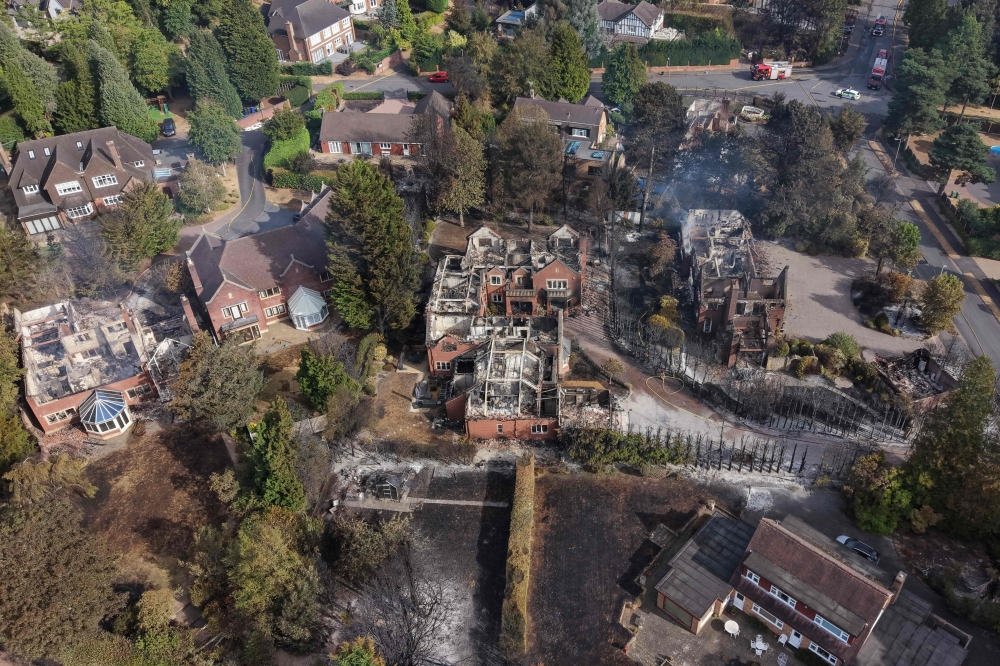
In Stourbridge, in central England, dramatic images showed scorched fields and homes badly damaged by fire after residents were forced to leave the area. Several people were also treated for smoke inhalation as flames spread rapidly during what was reported as the UK’s hottest day of the year so far.
Three firefighters were hospitalised while tackling the Stourbridge blaze, which broke out southwest of Birmingham.
Phil Garrigan, head of the National Fire Chiefs Council, described the period as particularly demanding for fire and rescue services.
Firefighters, he said, are increasingly finding themselves on the front line of a changing climate, working to protect people, homes and communities as extreme weather creates more challenging conditions.
The situation has been particularly serious across the West Midlands. The region, along with nearly three-quarters of England, has been experiencing drought conditions following weeks of high temperatures and very little rainfall.
West Midlands Fire Service said crews were making progress in tackling the Stourbridge fire, although the incident involved several points of origin.
At least six properties were affected, according to emergency services. Authorities also said some fires appeared to have been deliberately started in grassland before rapidly spreading through the exceptionally dry environment.
The scale of the incident has shocked local emergency officials.
West Midlands chief fire officer Simon Tuhill described it as one of the most significant incidents the service has ever attended, pointing to the extremely dry conditions as a major factor behind the speed at which the flames travelled.
The damage has been extensive, while the wider summer has already seen firefighters respond to wildfires across rural areas, grasslands and moorlands in different parts of the country.
For residents watching flames move closer to their homes, the situation has been more than a weather story. It has meant leaving properties behind, worrying about loved ones and watching familiar landscapes turn into dangerous fire zones.
The growing threat has also raised questions about whether emergency services have enough resources to deal with increasingly severe wildfire seasons.
The National Fire Chiefs Council has warned that the risk is developing faster than the UK’s collective ability to respond. Fire chiefs are calling for stronger investment and additional support to help emergency services prepare for more frequent, larger and increasingly complex wildfires.
Climate change, prolonged periods of extreme heat and changes in land use are all contributing to a more difficult wildfire environment, according to the council.
The latest fires serve as a powerful reminder that extreme heat does not simply mean uncomfortable days and higher temperatures. When heat combines with drought and dry vegetation, the consequences can become devastating within hours.
For communities living in vulnerable areas, preparedness is becoming increasingly important. Clearing dry vegetation around properties, following local fire warnings, having evacuation plans and responding quickly to official instructions can all make a difference when conditions deteriorate.
As Britain’s heatwave continues, firefighters remain on the front line, battling flames while protecting homes, businesses and communities.
The message from emergency leaders is increasingly clear: wildfire risk is changing, and preparation, investment and public awareness must change with it.